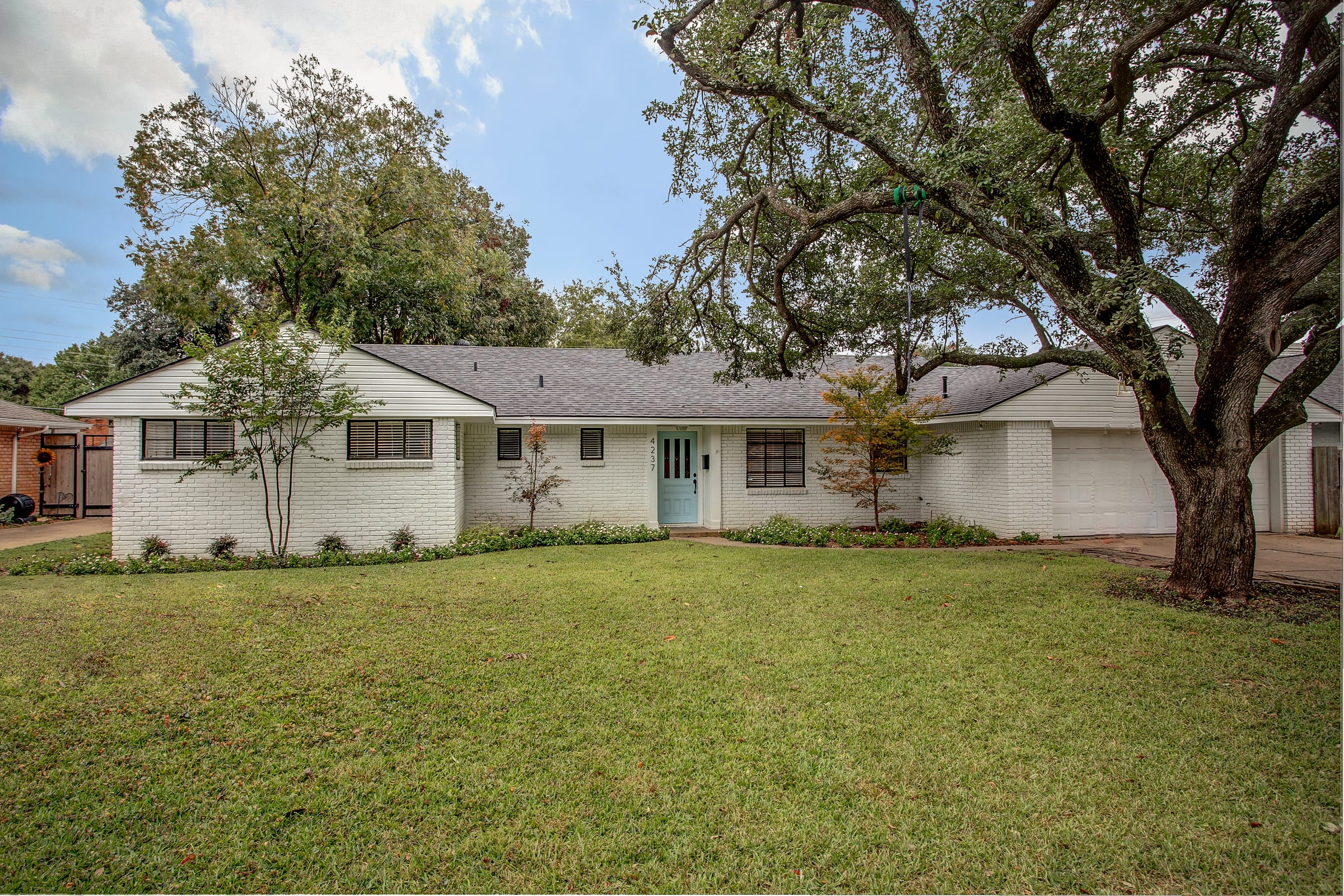
Tanglewood, Overton Park, and Riverhills Homes for Sale, Fort Worth 76109
Tanglewood and Overton Park are adjoining 1950s neighborhoods shaped by the hills and bends of the Clear Fork, with mature trees, generous lots, and predominantly ranch-style houses. Nearby Riverhills carries the Edwards Ranch story into the twenty-first century, pairing new construction and carefully planned streetscapes with the same access to the river, TCU, the Trinity Trails, Clearfork, and southwest Fort Worth.


From Ranch to the Ranch House

The Edwards Ranch

Long before Tanglewood and Overton Park, this was the Edwards Ranch. By the middle of the twentieth century, the family's holdings encompassed thousands of acres of southwest Fort Worth, stretching from the Clear Fork south along what would become Hulen Street toward Granbury Road. In 1955, Cass Edwards II formed Cassco Land Company and began developing 4,020 acres of the ranch. Tanglewood, Overton Park, Overton Crest, and Overton Woods followed, replacing cattle and open land with some of Fort Worth's defining postwar neighborhoods.
The scale of the old ranch is easier to understand by looking at what occupies it today. Fort Worth Country Day was built on former Edwards Ranch land, and other portions became Hulen Mall, Cityview, Clearfork, and much of the development along South Hulen Street. The change is more recent than the finished cityscape makes it seem. Within the last 20 years, you could still look beyond the baseball and softball fields at Country Day and see Edwards cattle grazing next door.
Riverhills and the Postwar Neighborhoods

Riverhills brings the story almost full circle. Developed in the twenty-first century on hundreds of acres of the remaining ranch south of the Clear Fork, the neighborhood represents another generation of residential development by the Edwards family's Cassco Land Company, more than half a century after Tanglewood and Overton Park. Across the river, Clearfork has transformed another large piece of the ranch into residences, offices, shops, restaurants, and riverfront trails. What began as one family's cattle ranch has shaped the growth of southwest Fort Worth for generations.
Tanglewood and Overton Park were among the earlier chapters in that transformation. Developed largely in the 1950s and 1960s, both exchanged open ranch land for a distinctly postwar kind of neighborhood: generous lots, winding streets that respond to the terrain rather than the city's older grid, neighborhood schools, parks, and predominantly single-story ranch houses. The connection between the old ranch and the new neighborhoods was literal as well as historical. Cass Edwards provided the land for Tanglewood Elementary for a nominal $1, with the understanding that it would be used for a public school.
Overton Park and Greater Overton

The two neighborhoods are closely connected, but they are not interchangeable. Tanglewood and Overton Park share much of the same landscape and period housing, while each has its own neighborhood elementary school. Overton Park itself is also the name of the long greenbelt between them. Cassco deeded the original parkland to the city in 1959, and the park has since grown to nearly 49 acres, with trails, tennis courts, playgrounds, and green space linking Tanglewood and Overton Park with Foster Park farther south.
The greater Overton area needs a little untangling. Overton Park, Overton Woods, Overton West, and Overton South are separate neighborhoods, with Foster Park and the Villages of Stonegate adjoining. They are not interchangeable, and neither are their houses or values. Development period, lot size, architectural character, and price can change considerably depending on which Overton someone actually means.
Ranch Houses, New Construction and Pricing
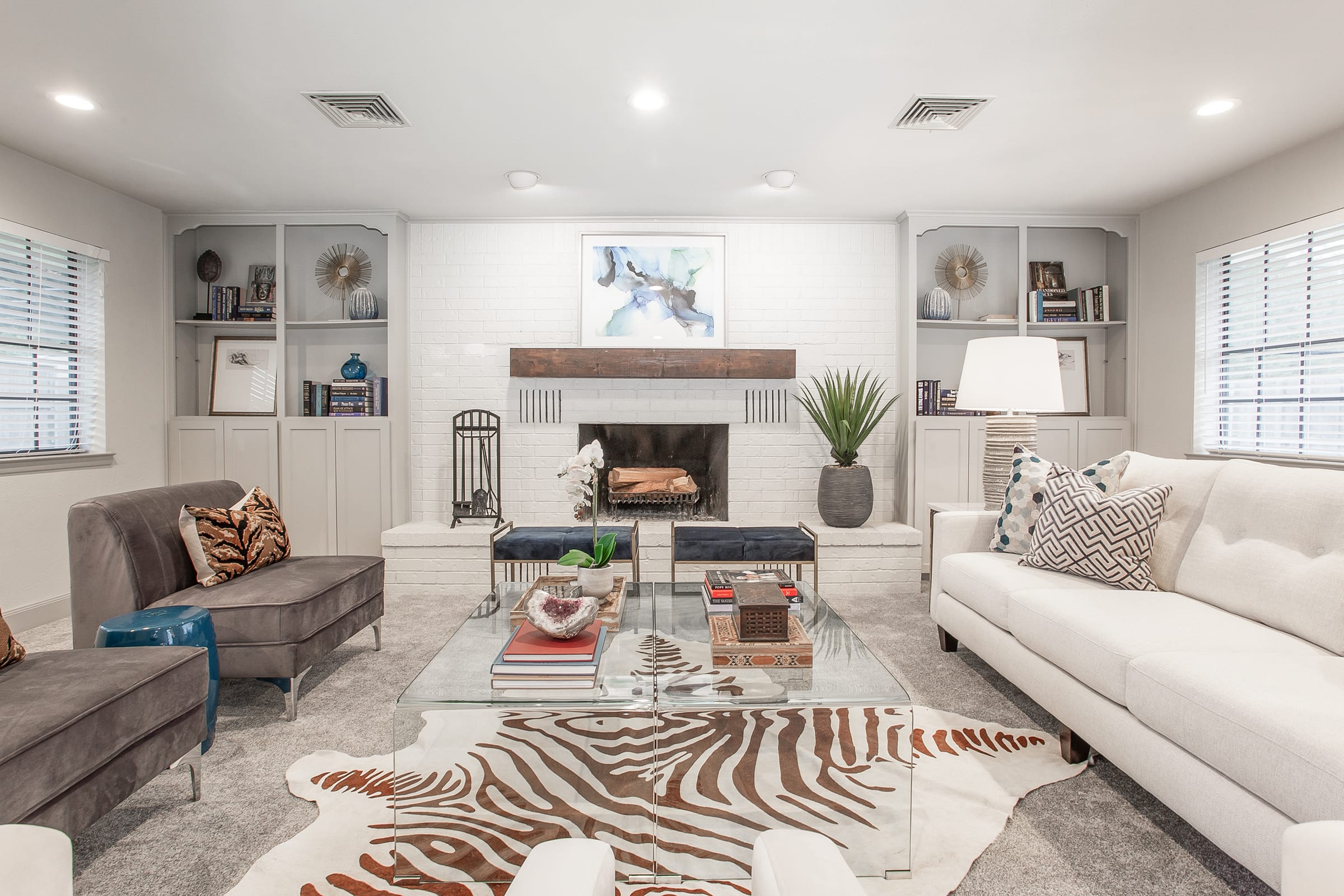
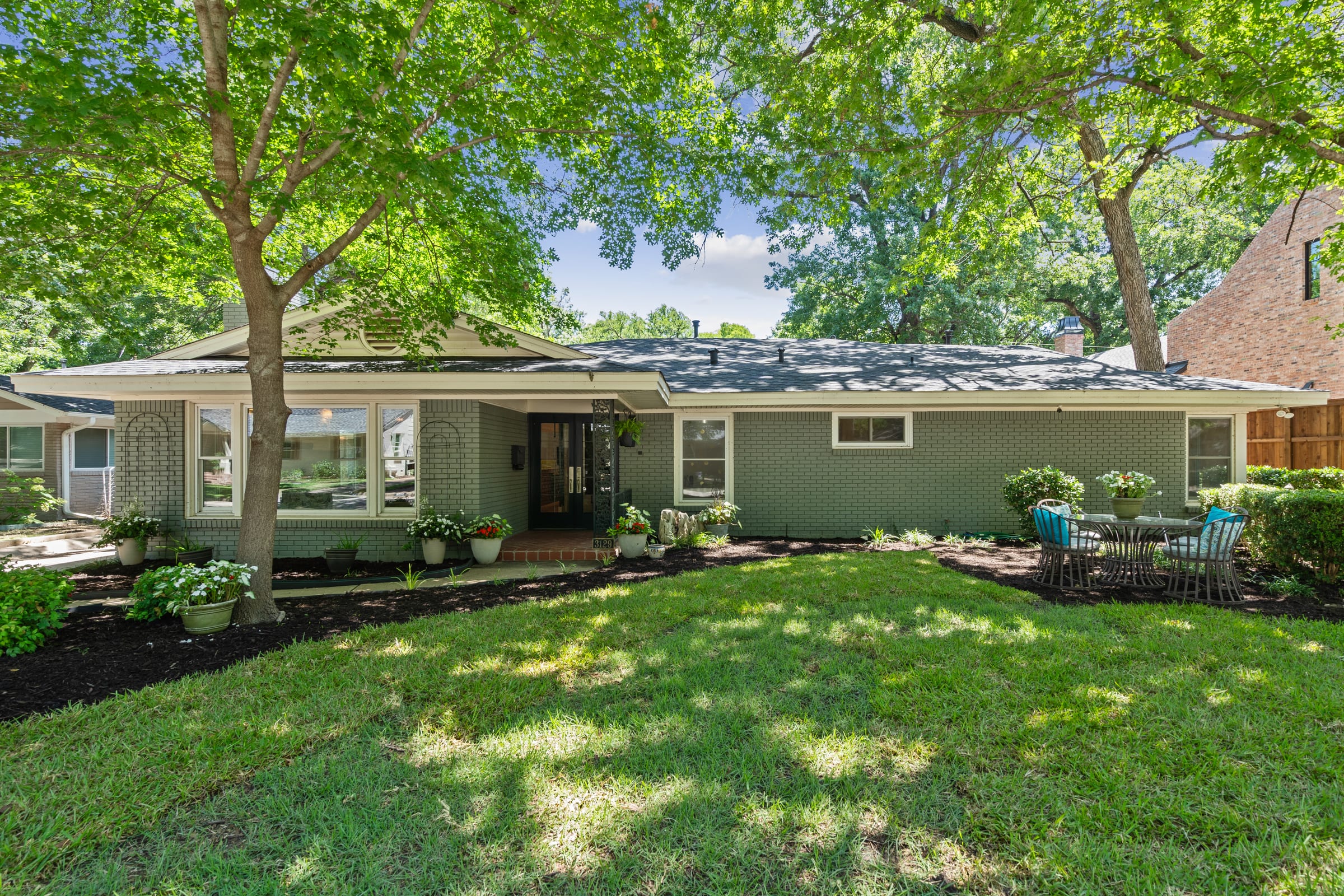
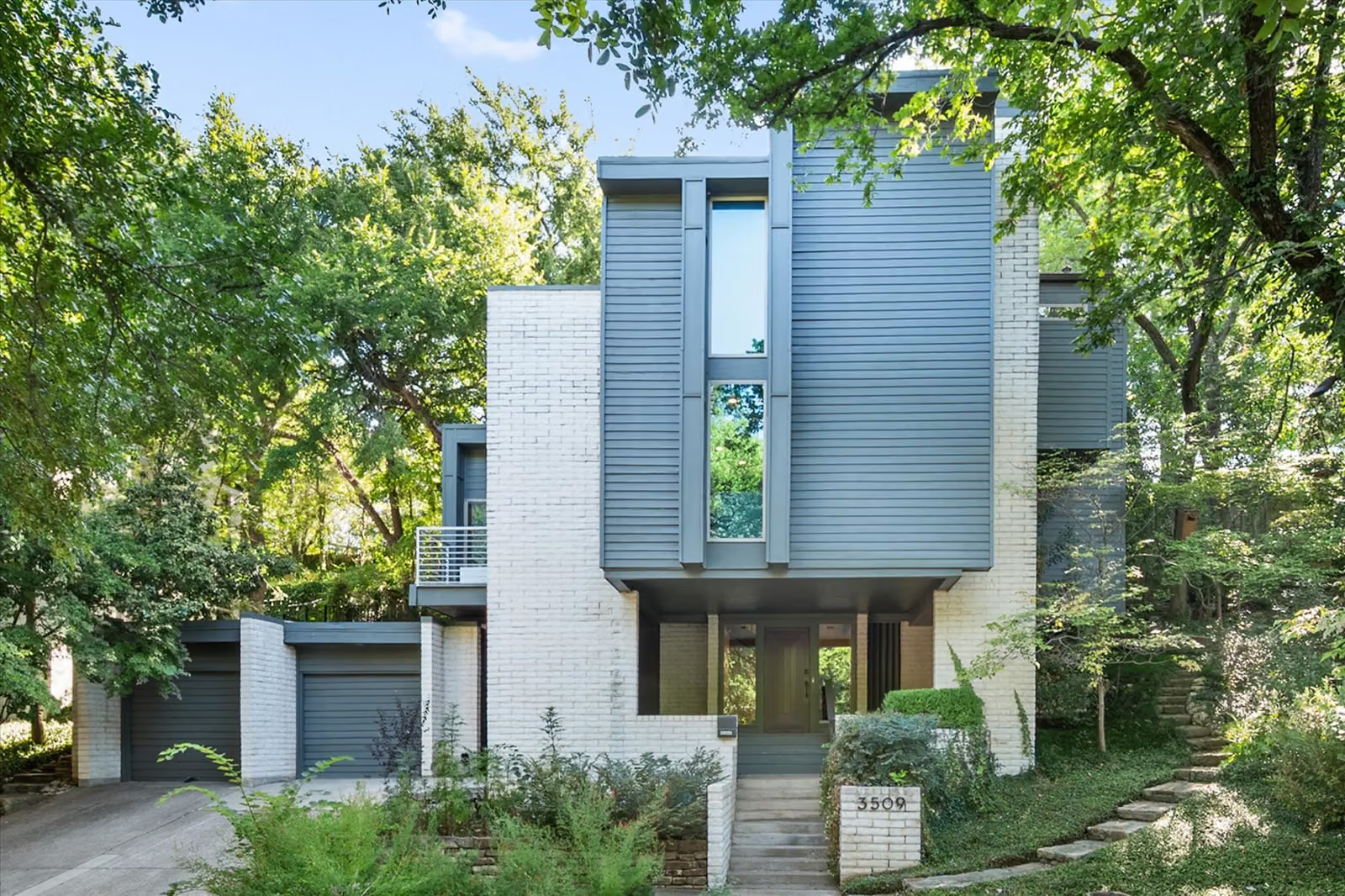
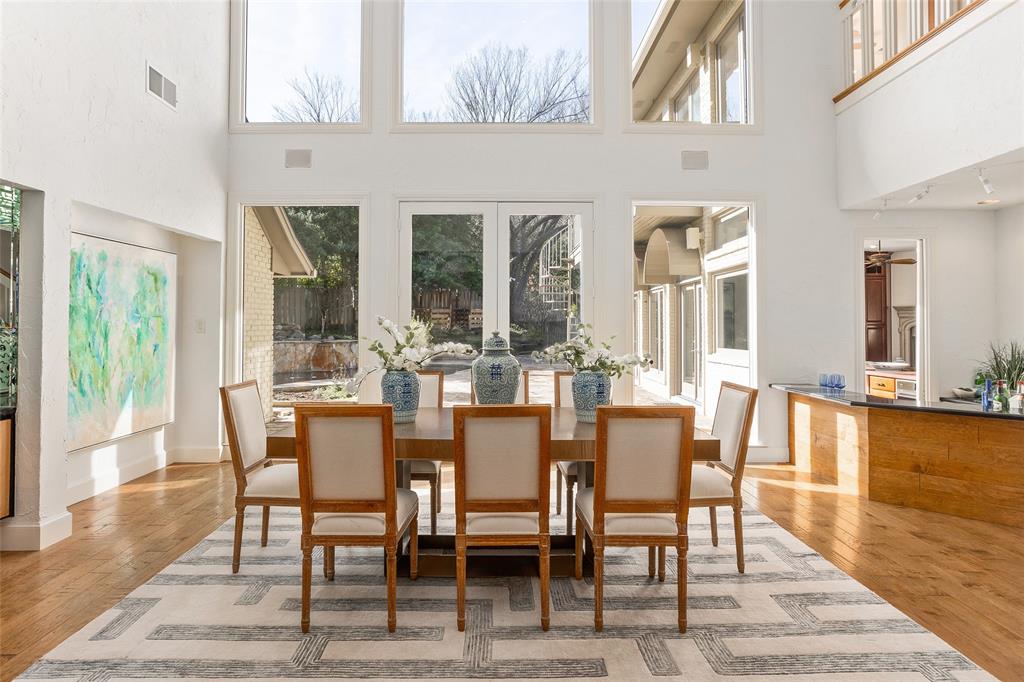
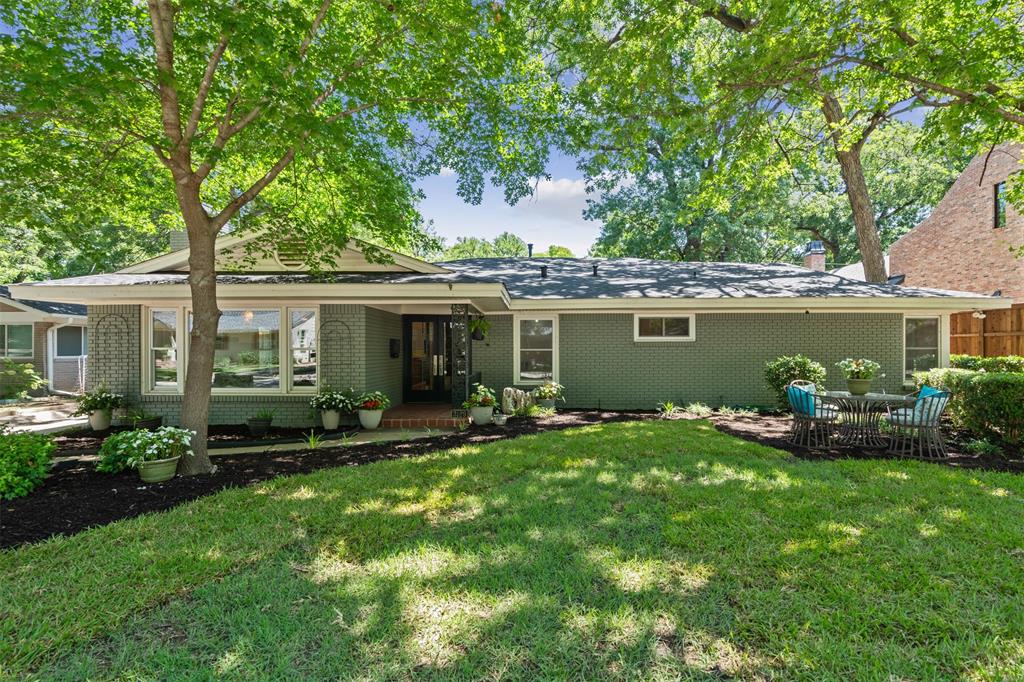
The housing is the reason people come. Tanglewood and Overton Park are predominantly neighborhoods of ranch houses built in the 1950s and 1960s, most of them single-story, low-slung, and set well back on generous lots. Midcentury Modern influences appear alongside more traditional Colonial and transitional designs, with larger two-story houses mixed in as development continued. The rolling terrain and mature trees keep the neighborhoods from feeling formulaic, and the best original houses still make a very good case for why the American ranch became the defining house type of postwar suburbia.
They are no longer exclusively neighborhoods of original ranch houses. Decades of additions and renovations have changed some substantially, while others have been removed altogether and replaced by considerably larger new construction. On certain blocks, the change in scale is noticeable. Riverhills offers a different approach to new construction. Its later additions have continued to open new homesites under detailed architectural and landscape design standards intended to create variety without sacrificing a coherent streetscape. The goal is not to imitate an older Fort Worth neighborhood, but to build one with enough attention to architecture, materials, setbacks, landscaping, and the public realm that it can age gracefully into the fabric of the city. Whether new construction represents opportunity or concern depends rather neatly on the neighborhood and which side of the transaction you occupy.
That variety also makes broad neighborhood pricing unusually unhelpful. An original 1950s ranch, a comprehensively renovated house, and a large new build can sit within a few doors of one another and bear relatively little relationship in value beyond the land beneath them. Add the different sections of greater Overton, relatively few truly comparable sales, and Texas's status as a non-disclosure state, and online neighborhood medians can produce more confusion than clarity. Here, a handful of genuine comparables with similar lots, condition, age, renovation quality, and location will tell you considerably more than a ZIP-code average ever could.
Working With Susanna

Susanna Bartolomei is a Broker Associate at Compass and a fifth-generation Fort Worth native, with an undergraduate degree in History of Art and Architecture from Middlebury College and a master's degree in History of Art from The University of Texas at Austin. She serves on the Board of Directors of the Modern Art Museum of Fort Worth and the Board of Directors of The Cliburn, and RealTrends ranks her among the top 1.5 percent of agents nationwide. In Tanglewood and Overton Park, where an original ranch, a thoughtful renovation, a major expansion, and a redevelopment lot can sit on the same street, understanding architecture, condition, and the particular block is part of understanding value. Her office on Edwards Ranch Road is just minutes away, on a street whose name still tells the story of the land around it.
What to Love
What to Love About Tanglewood, Overton Park, and Riverhills
Schools Built Into the Neighborhood
Tanglewood Elementary and Overton Park Elementary are not simply schools assigned to these neighborhoods; they are physically part of them. Tanglewood Elementary has an especially good connection to the area's history: Cass Edwards provided the land for the school for a nominal $1 as the former Edwards Ranch was being developed. Today, both campuses remain woven into the residential streets around them, a legacy of the postwar idea that an elementary school should sit at the center of neighborhood life.
Room to Breathe, Close to the City
Land is one of the defining features of Tanglewood and Overton Park. Generous lots follow the rolling terrain, mature trees soften the streets, and houses generally sit well back from the road. All of this happens only a few miles from downtown Fort Worth, with the Clear Fork, TCU, and Colonial immediately to the north. That combination of space, established landscape, and central location is increasingly difficult to reproduce.
Ranch Houses Worth Keeping
Tanglewood and Overton Park contain one of Fort Worth's strongest concentrations of postwar ranch houses: predominantly single-story homes from the 1950s and 1960s, set low against generous lots, with Midcentury Modern and more traditional influences mixed throughout. Many have been expanded or substantially renovated, and others remain remarkably intact. For buyers who appreciate the proportions, materials, and easy indoor-outdoor relationship of a good American ranch, the original houses are still a considerable part of the appeal.
A Greenbelt Through the Neighborhood
Overton Park is both a neighborhood and nearly 49 acres of linear parkland winding through this part of Fort Worth. Cassco deeded the original parkland to the city in 1959, and today its trails, tennis courts, playgrounds, and open green space connect Tanglewood and Overton Park toward Foster Park and the Clear Fork. The Trinity Trails extend the network considerably farther, giving this unusually residential part of Fort Worth direct access to miles of trails along the river.
TCU, Clearfork, the River, and Downtown Within Minutes

Few parts of Fort Worth combine this much residential quiet with this much access. TCU and Colonial Country Club sit just north of Tanglewood and Overton Park, while the Clear Fork and Trinity Trails run alongside the area. The Shops at Clearfork are minutes away, with Neiman Marcus and luxury boutiques including Louis Vuitton, Saint Laurent, and Burberry, alongside restaurants, a cinema, and everyday services. Chisholm Trail Parkway and Interstate 20 provide quick routes south and west, while downtown and the Cultural District remain remarkably close for neighborhoods with this much land and green space.
A New Neighborhood Designed to Age Well

Riverhills carries the Edwards Ranch story into a very different era. Rather than inheriting an existing architectural fabric, the neighborhood has used detailed architectural and landscape standards to shape new construction from the beginning, with attention to materials, setbacks, landscaping, streetscapes, and the relationship between individual houses and the neighborhood as a whole. The intention is not to manufacture an old neighborhood, but to create a new one capable of aging gracefully into the fabric of Fort Worth.
Foster Park
At the southern end of the Overton Park greenbelt, Foster Park adds another 12 acres of trails, playgrounds, tennis courts, and open space along a tributary of the Clear Fork. Its wooded paths and connections into the surrounding neighborhoods make it feel less like a destination park than an extension of the backyards around it, particularly for Overton Park, Overton Woods, and Foster Park residents.
The Trinity Trails at Your Back Door

The Clear Fork forms the northern edge of this part of Fort Worth, with direct access to the Trinity Trails connecting the neighborhoods to more than 100 miles of trails throughout the city. From here, you can head toward Trinity Park, the Cultural District, and downtown in one direction or toward Clearfork and southwest Fort Worth in the other. It is one of the rare places in Fort Worth where the river functions as both scenery and transportation.
Overton Woods and Overton West
"Overton" describes considerably more than Overton Park. Overton Woods and Overton West extend the story south and west with later development, larger houses, and their own distinct streets and lot patterns. The differences are important enough that two houses marketed as being in "Overton" may belong to very different housing markets, which is one reason the neighborhood name matters more here than the ZIP code.
Stonegate and Westbriar
Gated neighborhoods are relatively uncommon in central Fort Worth, which makes Stonegate and Westbriar notable exceptions. Both offer controlled-access residential enclaves within the broader Tanglewood and Overton area, giving buyers another option alongside the open streets of the older neighborhoods and the newer construction of Riverhills. Their housing, lots, and character differ from one another, but both provide something that is surprisingly difficult to find this close to TCU, Clearfork, the Trinity Trails, and central Fort Worth: a gated neighborhood without moving to the outer edges of the city.
Edwards Ranch Road Still Tells the Story
The Edwards name never really left this part of Fort Worth. Edwards Ranch Road crosses the family's former holdings between Hulen Street and Clearfork, passing through land that has transformed from cattle ranch to neighborhoods, schools, offices, shops, and restaurants over the course of generations. It is an unusually literal piece of Fort Worth history hiding in plain sight: the road still carries the name of the ranch beneath everything around it.
Country Day and the Last of the Edwards Ranch
Fort Worth Country Day sits on land that was once part of the Edwards Ranch, and the ranch remained visible here surprisingly recently. Within the last 20 years, you could stand near the school's baseball and softball fields and look out at Edwards cattle grazing next door. Riverhills now occupies much of that landscape, making this one of the clearest places to see how quickly southwest Fort Worth has changed within a single generation.
Property Types
Tanglewood, Overton Park, Riverhills, and the Overton Neighborhoods
Tanglewood may be the best-known name, but it describes only one piece of a much larger residential area along the Clear Fork. Overton Park, Overton Woods, Overton West, Overton South, Riverhills, Foster Park, Stonegate, and Westbriar each offer a somewhat different version of southwest Fort Worth. Knowing which one you are actually looking at matters, because the housing, lot sizes, schools, architectural character, and values can change substantially within a surprisingly short distance.

New Construction, From Tanglewood to Riverhills
New construction takes two very different forms in this part of Fort Worth. In Tanglewood and Overton Park, valuable lots have made teardown-and-rebuild projects an established part of the market. Buyers can therefore find a new custom house sitting among ranches built 60 or 70 years earlier, sometimes at a dramatically different scale from its neighbors.
Riverhills approaches new construction from the opposite direction. Developed on former Edwards Ranch land in the twenty-first century, its newer sections use detailed architectural and landscape standards to create variety while maintaining a coherent streetscape. For buyers who want newer construction near TCU, Clearfork, the Trinity Trails, and established central Fort Worth neighborhoods, it offers something fundamentally different from buying an older house for the lot and starting again.
For sellers of an older Tanglewood or Overton Park house, the distinction matters as well. An original house may have value as a residence, as a renovation project, or primarily as the land beneath it. Those numbers are not necessarily the same, and the highest-value buyer may not be the one you first expect.
The Many Overtons
"Overton" is not one neighborhood. Overton Park, Overton Woods, Overton West, and Overton South are distinct areas, and treating them as interchangeable is one of the easiest ways to misunderstand this market. The differences are not merely semantic. Development period, house size, lot size, architecture, school assignment, and value can change considerably from one Overton to another. Before comparing two houses here, establish exactly where each one sits.

Buying a 1950s or 1960s Ranch
The original houses in Tanglewood and Overton Park come with the usual considerations of their era. Electrical systems deserve careful review, including the panel and, in later houses, the possibility of aluminum branch wiring. Older sanitary lines may be cast iron or clay, making a sewer scope particularly useful. Foundation type and movement should be evaluated in the context of North Texas soils, and an unrenovated house may also have aging windows, roofing, HVAC, plumbing, or other systems.
None of those things makes a 1950s ranch inherently problematic. Many were straightforward, well-built houses, and thoughtful renovations can preserve what made them good while updating the systems and floor plan for the way people live now. The important distinction is between a house that is genuinely updated and one that simply looks updated. New finishes do not necessarily mean new plumbing, wiring, drainage, windows, or mechanical systems.
Flood and Drainage Risk Is Property-Specific
The Clear Fork and its tributaries are fundamental to the landscape here, which also means water deserves attention when buying. Flood and drainage risk can vary considerably from one property to another, even within the same neighborhood or street. Fort Worth also cautions that reported flooding occurs outside FEMA-designated floodplains, so simply seeing that a house lies outside a FEMA flood zone is not the end of the inquiry.
For a specific property, check both the current FEMA mapping and the City of Fort Worth's address-level flood-risk information, review the seller's disclosure, ask about prior water intrusion or drainage work, look for any available elevation certificate, and obtain an insurance quote early. Topography, creeks, drainage channels, lot grading, and improvements made upstream or downstream can matter more than the neighborhood name.
Two Things to Check by Address
First, confirm the neighborhood. Between Tanglewood, the different Overtons, Riverhills, Foster Park, Stonegate, and Westbriar, a listing description can be considerably less precise than the plat beneath it. For valuation, the correct subdivision and genuinely comparable nearby sales matter far more than a broad 76109 average.
Second, confirm the school assignment. Tanglewood Elementary and Overton Park Elementary both serve this part of Fort Worth, and assignments elsewhere in the greater Overton area should not be inferred from the neighborhood name alone. Fort Worth ISD boundaries can change, so the district's current address-based school locator should be checked for any house where school assignment matters to the purchase.
Comparison
Tanglewood and the Overton Neighborhoods | Area by Area
Available Homes
Tanglewood, Overton Park, and Riverhills Homes for Sale
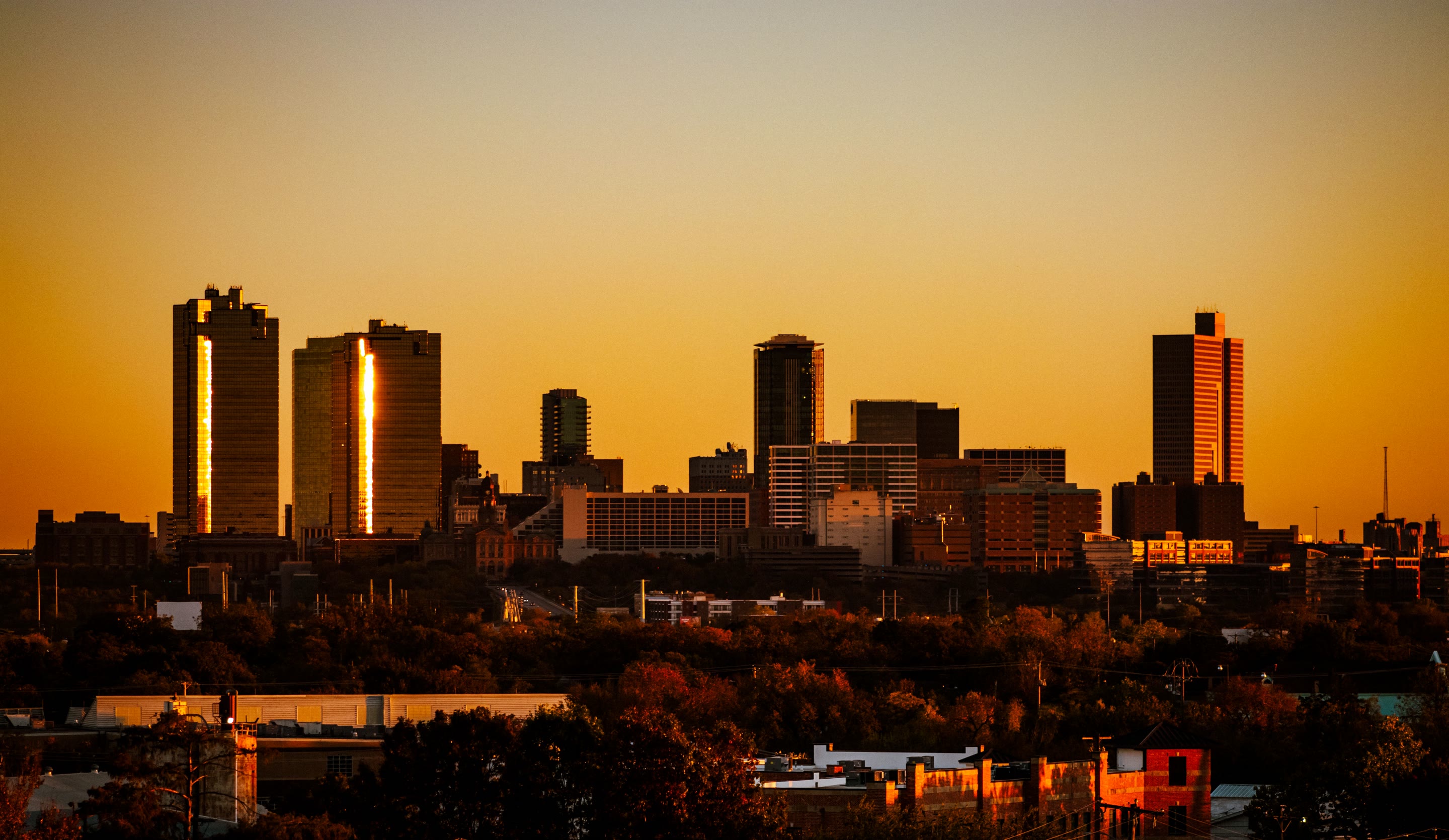
Browse current homes for sale in Tanglewood, Overton Park, and Riverhills, alongside listings in Overton Woods, Overton West, Overton South, Foster Park, Stonegate, and Westbriar. Housing ranges from original 1950s and 1960s ranch houses on generous lots to extensively renovated homes, gated enclaves, and new custom construction, all within the greater Clear Fork and southwest Fort Worth area.
Search All Tanglewood and Overton ListingsLiving Here
Living in Tanglewood, Overton Park, and Riverhills

Parks, Trails, and the Clear Fork
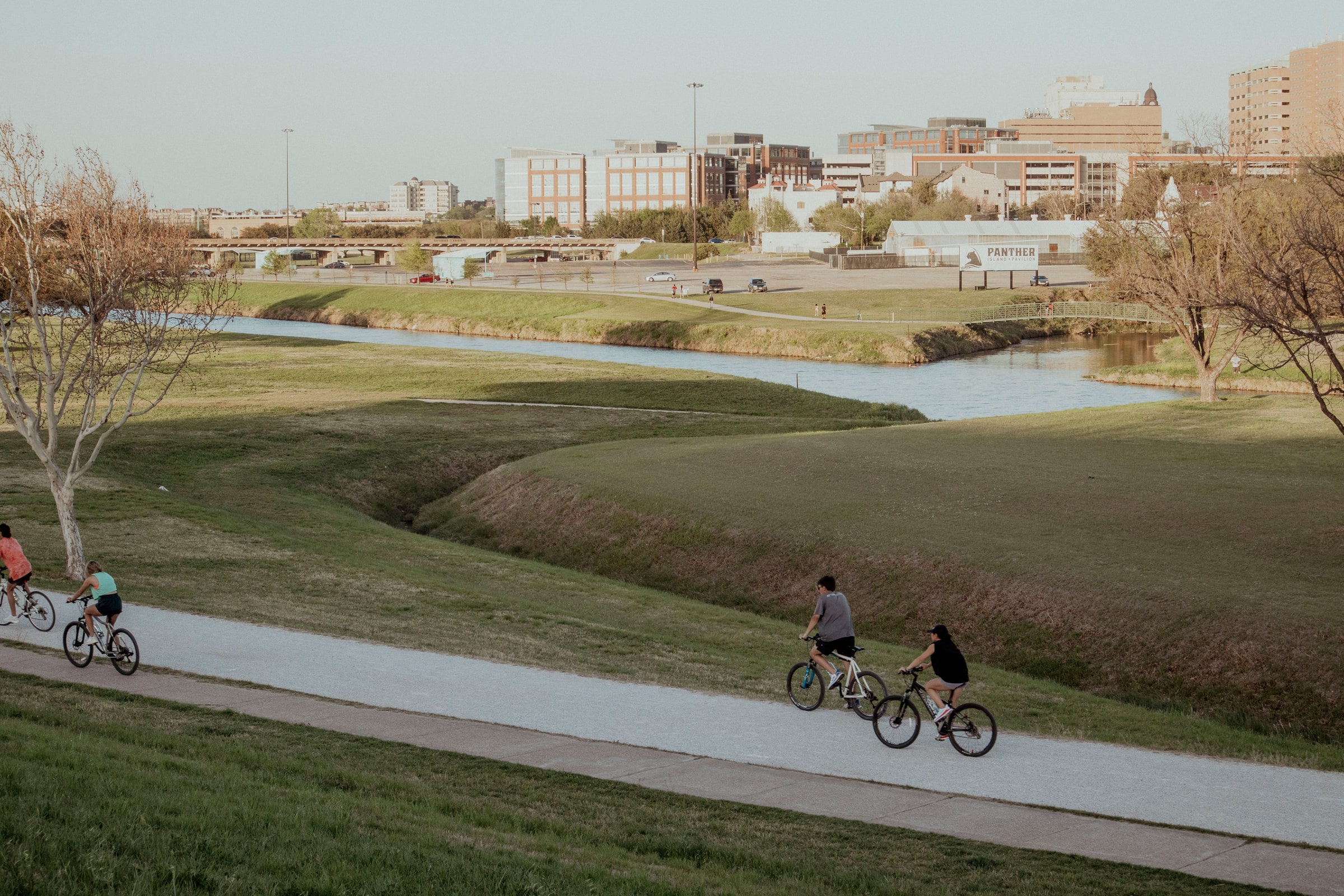
Overton Park runs through the heart of Tanglewood and Overton Park, functioning less like a destination park than part of the neighborhoods themselves. Nearly 49 acres of linear green space include trails, tennis courts, playgrounds, and open lawn, with Foster Park continuing the greenbelt farther south. Interior streets are generally quiet, and the park system gives walkers, runners, children, and dogs a route through the neighborhoods away from the larger surrounding roads.
The Clear Fork of the Trinity River defines the northern edge of the area and provides access to Fort Worth's Trinity Trails, a network of more than 100 miles connecting neighborhoods, parks, downtown, and the Cultural District. Riverhills and Clearfork extend that relationship with the river farther south and west. For neighborhoods developed primarily around the automobile, there is an unusual amount of recreational life happening outside it.
Clearfork, Shopping, and Everyday Needs
Tanglewood and Overton Park are overwhelmingly residential, which is part of their appeal, while Riverhills sits especially close to the newer development at Clearfork. The Shops at Clearfork provide the area's principal concentration of luxury shopping and dining, anchored by Neiman Marcus and including Louis Vuitton, Saint Laurent, Burberry, restaurants, a cinema, fitness, and everyday services.
University Park Village and the University Drive corridor are a few minutes north toward TCU, while grocery stores and general shopping are available in several directions along Hulen and the surrounding commercial corridors. The Cultural District, Near Southside, and Magnolia Avenue are all close enough to be part of regular life rather than special-occasion destinations.


TCU, Downtown, and Getting Around
Location is one of the practical arguments for all three neighborhoods. TCU and Colonial Country Club sit immediately north of Tanglewood and Overton Park, downtown Fort Worth is only a few miles northeast, and the Cultural District and medical district are similarly close. Chisholm Trail Parkway provides quick access north and south, while Interstate 20 connects to the wider Metroplex without running through the neighborhoods themselves.
This is an important distinction: Tanglewood, Overton Park, and Riverhills are pleasant places to walk, but they are not particularly walkable places to live. The parks, trails, river, and quiet residential streets make walking and running part of neighborhood life; groceries, restaurants, schools beyond the neighborhood campuses, and most daily errands still generally require a car.
Schools
Tanglewood, Overton Park, and Riverhills Schools | Elementary Schools to Paschal
Tanglewood, Overton Park, Riverhills, and the surrounding neighborhoods are served by Fort Worth Independent School District, but there is not one elementary-school assignment for the entire area. Tanglewood Elementary and Overton Park Elementary both serve this part of southwest Fort Worth, with assignments varying by address across the greater Overton area, Riverhills, Foster Park, Stonegate, and Westbriar. For any purchase where school assignment matters, confirm the current path with Fort Worth ISD rather than relying on the neighborhood name.

Two Neighborhood Elementary Schools
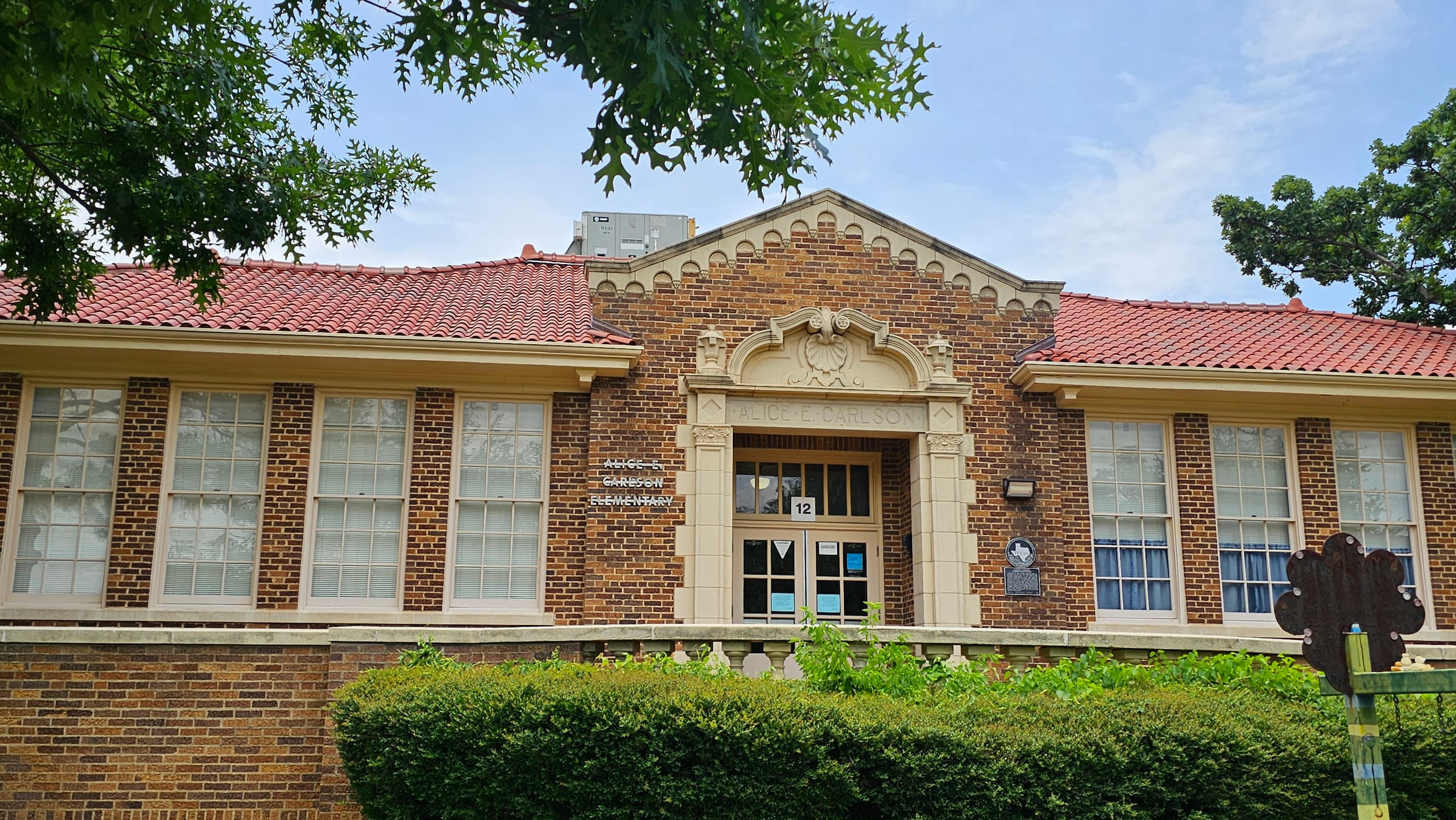
Tanglewood Elementary and Overton Park Elementary are both embedded in the neighborhoods they serve, a particularly visible remnant of the postwar planning that shaped this part of Fort Worth. Tanglewood also has a direct connection to the Edwards Ranch story. According to Fort Worth ISD, Cass Edwards gave the land for the school to the City of Fort Worth for $1 in 1960, with the understanding that the undeveloped property would be used for a public school.
From elementary school, many addresses in this area continue through the McLean school path and ultimately to R. L. Paschal High School, although the complete assignment should always be checked by address. Paschal traces its history to Fort Worth High School, established in 1882 as the city's first public high school. The school was later named for longtime educator Robert Lee Paschal and moved to its present Forest Park Boulevard campus in 1955.

A Different Path From the West Side
The school path is one of the distinctions buyers encounter when comparing this part of Fort Worth with neighborhoods farther west. Many addresses in Monticello, Crestwood, River Crest, Westover Hills, Westworth Village, and Ridglea ultimately feed Arlington Heights High School, while much of Tanglewood, Overton Park, the TCU area, Berkeley Place, Park Hill, and the historic Southside neighborhoods feed Paschal.
Both are longstanding comprehensive Fort Worth ISD high schools, and neither school name should substitute for checking the complete assignment attached to a particular house. But for buyers comparing neighborhoods across west and southwest Fort Worth, the house and the street are not the only things changing; the public-school path may change with them.
Fort Worth ISD Is Changing
Fort Worth ISD is in a period of significant transition. In March 2026, the Texas Education Agency temporarily suspended the authority of the elected trustees and appointed a nine-member Board of Managers, with Dr. Peter B. Licata selected as superintendent. Separately, the district is carrying out a multiyear facilities plan that calls for 18 campuses to close by June 2029 as enrollment and building use change.
Neither fact tells you what the experience will be at a particular school, but both make current information especially important. Attendance boundaries, campus configurations, programs, and feeder patterns can change. Before relying on a school assignment as part of a home purchase, confirm it directly with Fort Worth ISD.

How to Evaluate the Schools
School-rating websites can make the same campus look remarkably different depending on how each service weights test scores, academic growth, college readiness, demographics, and other measures. A single number is therefore a poor substitute for looking at the school itself.
Start by confirming the assigned campuses for the specific address with Fort Worth ISD. Then review the current Texas Education Agency accountability information for each campus, look at the programs offered, and visit when possible. Fort Worth ISD also offers application-based schools and programs of choice, so the zoned path is important, but it is not necessarily the only public-school option available to a student.
At a Glance
Tanglewood, Overton Park, and Riverhills at a Glance

4 mi
Location
Southwest Fort Worth along the Clear Fork of the Trinity River, south of TCU and Colonial Country Club and roughly four miles from downtown Fort Worth

76109
ZIP code
76109

9
Areas covered
Tanglewood, Overton Park, Overton Woods, Overton West, Overton South, and Riverhills, with Foster Park, Stonegate, and Westbriar adjoining

1950s to 1960s
Housing character
Tanglewood and Overton Park are predominantly 1950s and 1960s ranch neighborhoods with generous lots, mature trees, Midcentury Modern and traditional influences, substantial renovations, and increasing replacement construction. The wider Overton area varies considerably by section. Riverhills adds newer custom construction shaped by detailed architectural and landscape standards.

2 elementary schools
Schools
Fort Worth ISD, with Tanglewood Elementary and Overton Park Elementary serving portions of the area and many addresses continuing through the McLean and Paschal school path. Assignments vary by address and should be confirmed directly with Fort Worth ISD.

49 acres
Parks and open space
Nearly 49 acres of linear parkland at Overton Park, Foster Park to the south, the Clear Fork of the Trinity River, and access to Fort Worth's Trinity Trails network

Car dependent
Getting around
Primarily car-dependent for daily errands but particularly good for recreational walking, running, and cycling through the neighborhood parks and Trinity Trails. TCU, Colonial, Clearfork, the Cultural District, the medical district, and downtown are all within a relatively short drive.

Clearfork
Shopping and dining
The Shops at Clearfork are minutes away, with Neiman Marcus, Louis Vuitton, Saint Laurent, Burberry, restaurants, a cinema, and services. University Park Village, the University Drive corridor, and Hulen provide additional shopping, dining, groceries, and everyday needs.
Original houses
Property considerations
Original houses may require the usual due diligence associated with 1950s and 1960s construction, including electrical systems, sewer lines, foundations, roofing, windows, plumbing, and mechanical systems. Flood and drainage risk should be evaluated property by property using current City of Fort Worth and FEMA information.

Varies by lot and age
Market character
Values vary substantially by neighborhood, lot, age, condition, renovation quality, and redevelopment potential. Original ranch houses, comprehensively renovated homes, redevelopment lots, gated properties, and new custom construction can exist within a relatively small geographic area, making subdivision-level and property-specific comparables more useful than broad neighborhood medians.

9 places nearby
Nearby
TCU, Colonial Country Club, Clearfork, Fort Worth Country Day, Trinity Trails, University Park Village, the Cultural District, the medical district, and downtown Fort Worth

Edwards Ranch
Development history
Tanglewood and Overton Park were developed from the Edwards Ranch beginning in the 1950s. The same family's Cassco Land Company later developed Riverhills on remaining ranch land, extending the story from cattle ranch to postwar suburb to twenty-first-century Fort Worth.
Sources: Fort Worth ISD and the Texas Education Agency 2025 accountability release; City of Fort Worth Parks and Recreation; development history from published accounts of the Edwards Ranch and Cassco Land Company. School attendance zones, programs, and accountability ratings are set by the school district and the Texas Education Agency and are subject to change. Buyers should verify current zoning and campus information for a specific address before relying on school information in a real estate decision.
In Pictures
Tanglewood and Overton Park


Related Reading

Nearby Neighborhoods


Questions
Frequently Asked Questions About Tanglewood, Overton Park, and Riverhills
Where are Tanglewood, Overton Park, and Riverhills in Fort Worth?
How much do homes cost in Tanglewood, Overton Park, and Riverhills?
What is the difference between Overton Park, Overton Woods, Overton West, and Overton South?
What is Riverhills, and how is it different from Tanglewood and Overton Park?
What kind of houses are in Tanglewood and Overton Park?
Is it worth buying a teardown lot in Tanglewood or Overton Park?
Is flooding a concern in Tanglewood, Overton Park, or Riverhills?
What schools serve Tanglewood, Overton Park, and Riverhills?
Who should I call about buying or selling in Tanglewood, Overton Park, or Riverhills?
Tanglewood, Overton Park, and Riverhills sit in southwest Fort Worth in ZIP code 76109, along the Clear Fork of the Trinity River and south of TCU and Colonial Country Club. Tanglewood and Overton Park are adjoining postwar neighborhoods developed largely in the 1950s and 1960s, while Riverhills is a much newer neighborhood on former Edwards Ranch land farther south. Clearfork, the Trinity Trails, Fort Worth Country Day, and the Chisholm Trail Parkway are all nearby, with downtown Fort Worth only a few miles northeast.
There is no particularly useful single median for this area. An original Tanglewood ranch, a comprehensively renovated Overton Park house, a teardown lot, and a newer custom house in Riverhills are fundamentally different properties, even when they sit within a relatively small geographic area. The different Overton neighborhoods add another layer of variation, and Texas is a non-disclosure state, making many publicly reported sale-price statistics less complete than they appear. For a specific house, recent comparable sales with similar lots, age, condition, renovation quality, and location are considerably more useful than a broad neighborhood or ZIP-code median.
They are separate neighborhoods within the greater Overton area, not interchangeable names for the same place. Overton Park is closely tied to Tanglewood and the linear park that shares its name, while Overton Woods, Overton West, and Overton South were developed at different times and contain different combinations of lot sizes, house sizes, architecture, and price points. The differences can be substantial enough that a sale in one Overton may be a poor comparable for a house in another. Confirm the actual subdivision before comparing properties.
Riverhills is a newer residential neighborhood developed by the Edwards family's Cassco Land Company on former Edwards Ranch land. Unlike Tanglewood and Overton Park, where new houses are generally built by replacing older ones, Riverhills was planned for new custom construction from the beginning. Detailed architectural and landscape standards govern elements of its development with the intention of creating varied individual houses within a coherent neighborhood. It offers buyers newer construction in the same general part of Fort Worth without requiring the teardown or extensive renovation often involved in creating a comparable house in Tanglewood or Overton Park.
Tanglewood and Overton Park are known primarily for ranch houses built in the 1950s and 1960s, generally single-story, low-slung, and set on generous lots. Midcentury Modern influences appear alongside more traditional designs, with larger and later houses mixed throughout. Many original houses have been substantially renovated or expanded, while others have been replaced with considerably larger custom construction. That combination of original ranches, renovations, redevelopment opportunities, and new houses is one of the defining features of the market.
It can be, but the value of the finished house does not automatically justify the cost of the project. Before buying for redevelopment, confirm the zoning and development requirements for the specific property, including setbacks, building height, drainage, trees, and any other restrictions affecting what can actually be built. Evaluate flood and drainage conditions, obtain realistic construction numbers, and study the immediate street. A large new house may make considerably more sense on a block where replacement construction is already established than on one where the original ranch scale remains largely intact. Sellers of older houses should likewise consider both the property's residential value and its potential land value before deciding how to position it.
Flood and drainage deserve attention because the Clear Fork and its tributaries shape this part of Fort Worth, but risk is property-specific rather than neighborhood-wide. A house outside a FEMA-designated floodplain can still experience drainage or water problems, while another property nearby may have very different conditions because of elevation, grading, drainage infrastructure, or proximity to a creek or channel. Check current FEMA and City of Fort Worth information for the specific parcel, review the seller's disclosure and any available elevation certificate, ask about previous water intrusion or drainage work, and obtain an insurance quote early in the purchase process.
The area is served by Fort Worth Independent School District, with Tanglewood Elementary and Overton Park Elementary serving portions of these neighborhoods and many addresses continuing through the McLean and Paschal school path. Assignments vary by address across Riverhills and the greater Overton area and should be confirmed directly with Fort Worth ISD. The district is also undergoing significant changes to campuses and facilities, making current address-level information especially important when school assignment is part of a purchase decision.
Susanna Gorski Bartolomei is a Broker Associate at Compass and a fifth-generation Fort Worth native with an undergraduate degree in History of Art and Architecture from Middlebury College and a master's degree in History of Art from The University of Texas at Austin. She serves on the boards of the Modern Art Museum of Fort Worth, The Cliburn, Lena Pope, and Texas Ballet Theater, and RealTrends ranks her among the top 1.5 percent of agents nationwide. Her office on Edwards Ranch Road is only minutes from these neighborhoods. In a market where an original ranch, a major renovation, a redevelopment lot, and a new custom house can require entirely different approaches to value, understanding the house, the land, and the particular street matters. Call (817) 602-5465.
Buy or Sell in Tanglewood, Overton Park, or Riverhills
Susanna Bartolomei represents buyers and sellers across Tanglewood, Overton Park, Riverhills, and the greater Overton area, alongside TCU, Colonial, Westcliff, Berkeley Place, Park Hill, the Near Southside historic districts, and the west-side neighborhoods from Monticello and River Crest through Westover Hills and Ridglea. A Broker Associate at Compass and a fifth-generation Fort Worth native, she works from an office on Edwards Ranch Road, just minutes from the neighborhoods built from the ranch that gave the road its name. In an area where an original ranch, a thoughtful renovation, a redevelopment lot, and a new custom house can require entirely different approaches to value, the useful thing is someone who can tell you what a particular house on a particular street is actually worth. Call (817) 602-5465 or email sgb@compass.com.
Agent
Susanna Gorski Bartolomei
Title
Broker Associate, Compass Real Estate
Phone
(817) 602-5465Office
5049 Edwards Ranch Road, Suite 200, Fort Worth, TX 76109
Hours
Monday to Friday, 9:00 am to 5:00 pm. Saturday and Sunday by appointment
Languages
English and French
Website
SusannaFortWorth.com
TREC License
0619175