
Colonial, TCU, and Westcliff Homes for Sale in Fort Worth, TX
Colonial, TCU, and Westcliff sit side by side in southwest Fort Worth, stretching from Colonial Country Club and the Clear Fork south past the TCU campus into the tree-lined streets of Westcliff. Within a few blocks, the housing shifts from 1920s and 1930s architecture to postwar ranches, substantial midcentury homes, newer construction, and properties shaped by their proximity to Texas Christian University.


Colonial, TCU, and Westcliff Real Estate | Inside Fort Worth's 76109

Along University Drive | Colonial Country Club

Colonial, the TCU area, and Westcliff form one continuous stretch of southwest Fort Worth along University Drive, roughly five miles from downtown. Drive from the Clear Fork south past TCU and into Westcliff, and you can watch Fort Worth's ideas about home change along the way, from substantial prewar houses near Colonial to the neighborhoods surrounding a growing university and, finally, the broad lots and low-slung ranch houses of postwar Fort Worth.
Colonial Country Club has anchored the northern end since 1936, when Leonard Brothers department store heir Marvin Leonard founded the club because he wanted bentgrass greens and couldn't convince an existing Fort Worth club to try them. He brought in golf architects John Bredemus and Perry Maxwell, and only five years later Colonial hosted the 1941 U.S. Open. Ben Hogan would win Colonial's PGA Tour event five times, giving the course its enduring nickname, Hogan's Alley.
Around TCU and Into Westcliff
Around TCU, the story changes. University Place, University West, Frisco Heights, Bluebonnet Hills, and Bluebonnet Place grew around a university that has itself been expanding and changing for more than a century. Here, 1920s and 1930s Tudors and cottages can sit near postwar houses, newer construction, and properties adapted to a university market. Sometimes the difference between an established residential street and one shaped heavily by student housing is only a few blocks.
Continue south into Westcliff and you arrive in another era of American residential design. Developed largely in the 1940s, 1950s, and 1960s, Westcliff trades much of the verticality and ornament of earlier houses for long rooflines, brick exteriors, attached garages, larger lots, and the increasingly informal floor plans of the postwar ranch house.
That progression is what makes this part of Fort Worth interesting to me. Colonial, TCU, and Westcliff share 76109, but the ZIP code disguises more than it explains. Within a remarkably short distance, the architecture, lot size, relationship to the university, and price point can all change. Here, the block tells you considerably more than the ZIP code.
Working With Susanna
Susanna Bartolomei is a Broker Associate at Compass, fifth-generation Fort Worth native, and art historian who represents buyers and sellers across the TCU area, Colonial Hills, Westcliff, and the surrounding neighborhoods of south and west Fort Worth. Her work combines architectural knowledge with the block-by-block real estate experience that matters in a part of the city where the market can change within only a few streets. Call (817) 602-5465 or email sgb@compass.com.
What to Love
What to Love About Colonial, TCU, and Westcliff
The Bluffs Above the Clear Fork
Not every Fort Worth view requires leaving the city. Parts of Colonial and the neighborhoods around the Clear Fork sit high enough to open toward the river valley, creating unusual elevation, bluff lots, and views that are easy to forget exist in a city we tend to think of as flat.
University Park Village and Clearfork
One of the practical pleasures of this part of town is how much is close at hand. University Park Village sits along the Clear Fork near TCU, while The Shops at Clearfork are only a few minutes farther west, putting restaurants, groceries, boutiques, fitness, and everyday errands unusually close to established residential neighborhoods.
Tournament Week at Colonial
For one week every spring, Colonial becomes the center of Fort Worth. The tournament now known as the Charles Schwab Challenge has been played here since 1946, bringing generations of the world's best golfers to the same course and turning the surrounding neighborhood into part sporting event, part garden party, and part very Fort Worth tradition.
TCU Game Days
Living around TCU means knowing when the Horned Frogs are playing whether or not you checked the schedule. Football Saturdays bring tailgates and crowds around Amon G. Carter Stadium, while basketball at Schollmaier Arena and baseball at Lupton Stadium give the neighborhood a sporting calendar that extends well beyond football season.
The Van Cliburn Concert Hall
TCU's cultural life is every bit as important as its athletics. The Van Cliburn Concert Hall at TCU, inside the Megan and Victor Boschini Music Center, brings concerts and visiting musicians to campus in a performance hall designed specifically around acoustics, making serious music part of the neighborhood rather than something you have to cross town to find.
Log Cabin Village
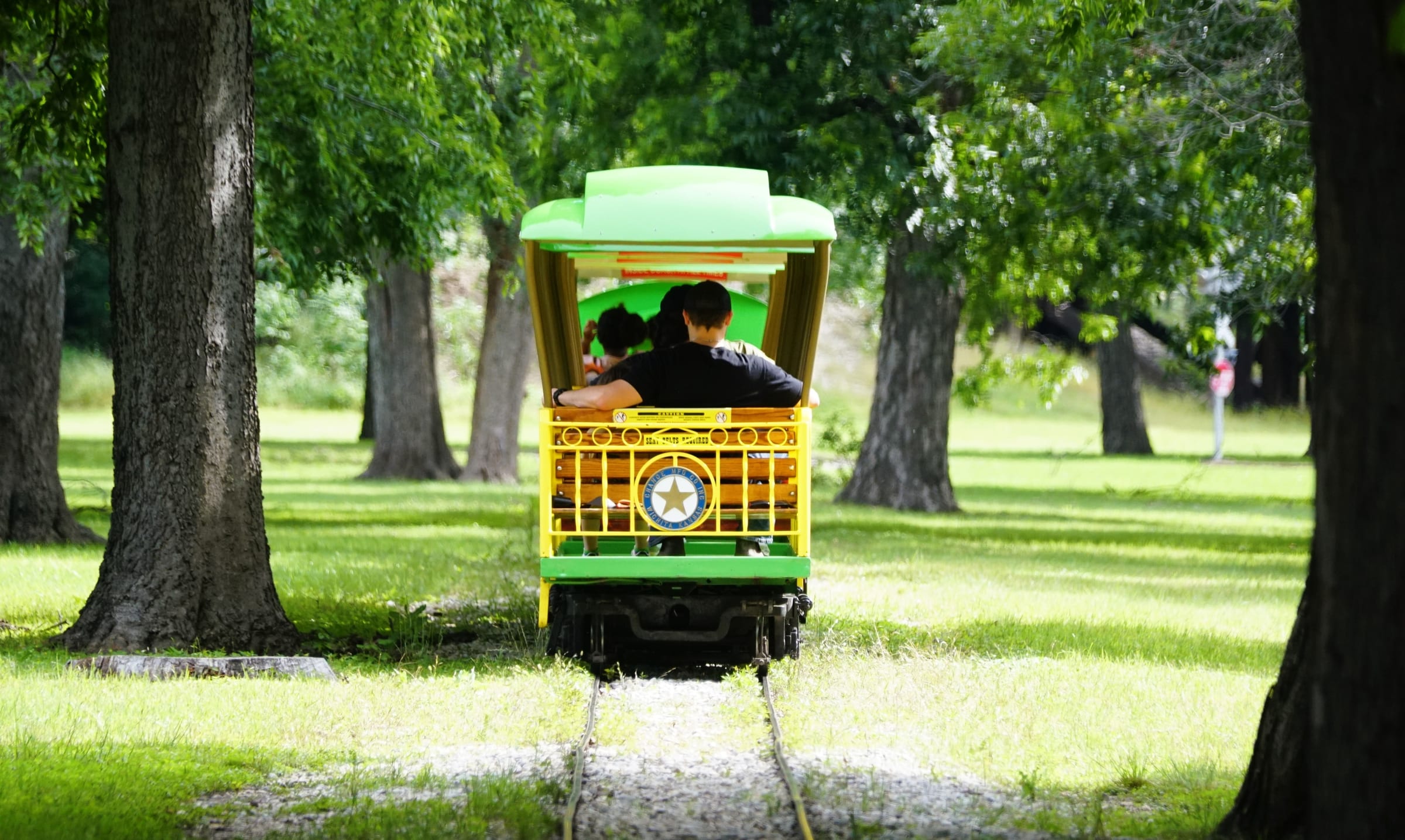
Just off University Drive beside the Fort Worth Zoo, Log Cabin Village is one of those wonderfully peculiar Fort Worth places that can be easy to overlook when you live here. The city's living-history museum preserves a collection of 19th-century structures and offers a glimpse of North Texas domestic life long before Colonial, TCU, or Westcliff existed.
Hogan's Alley
Colonial Country Club opened in 1936 because Marvin Leonard wanted bentgrass greens and couldn't persuade another Texas club to try them. Five years later it hosted the 1941 U.S. Open, and Ben Hogan would eventually win Colonial's PGA Tour event five times. His association with the course was so strong that Colonial became known as Hogan's Alley.
A University That Grew Up With Fort Worth
TCU's story is almost as peripatetic as Fort Worth's own. Founded by Addison and Randolph Clark at Thorp Spring in 1873, the school moved to Waco in 1895, became Texas Christian University there, and returned to Fort Worth after its Waco campus burned in 1910. Fort Worth helped lure it back with land, money, and the promise of streetcar service.
What grew from that move feels particularly Fort Worth. Today TCU includes the Neeley School of Business, the Burnett School of Medicine, energy business studies tied to the oil, gas, mineral, and land industries, and a Ranch Management program that has been training students since 1955. Add lectures, galleries, concerts, athletics, and performances, and TCU isn't simply a university residents drive past. It is one of the institutions that has grown alongside the city and continues to shape the neighborhood around it.
Three Eras of Fort Worth Houses
This may be my favorite thing about the area. Near Colonial and TCU are Tudors, cottages, and substantial prewar houses; move south and the architecture gradually becomes more horizontal and informal until you reach the brick ranches and midcentury houses of Westcliff. You can essentially watch Fort Worth's changing ideas about home unfold as you drive south.
Old Trees, Big Lots and Room to Breathe
One of the pleasures of moving south into Westcliff is the change in scale. Mature trees, wider streets, larger lots, and predominantly single-story houses create the kind of low, spacious streetscape that became characteristic of postwar Fort Worth.
The Trinity Trails at Your Doorstep
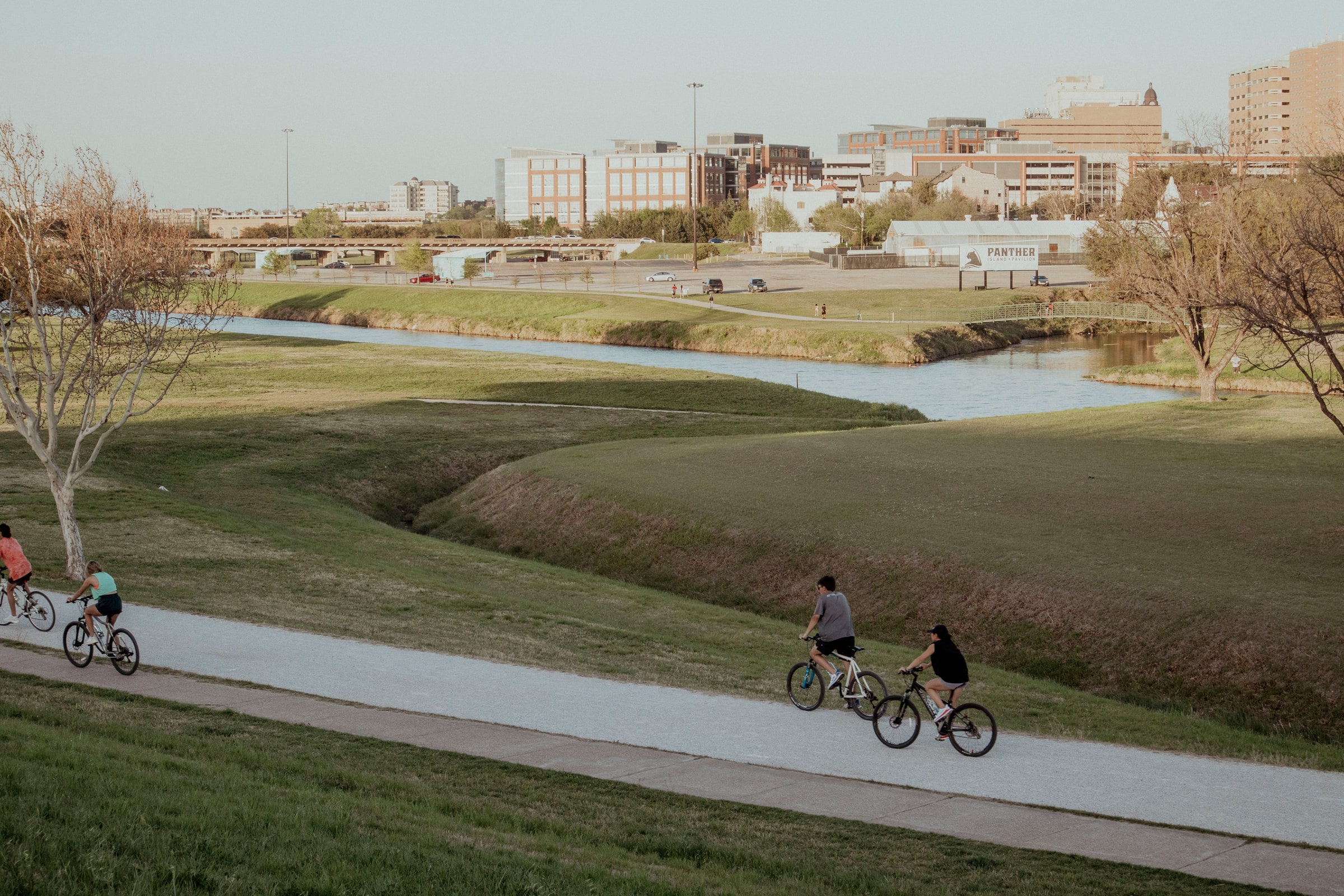
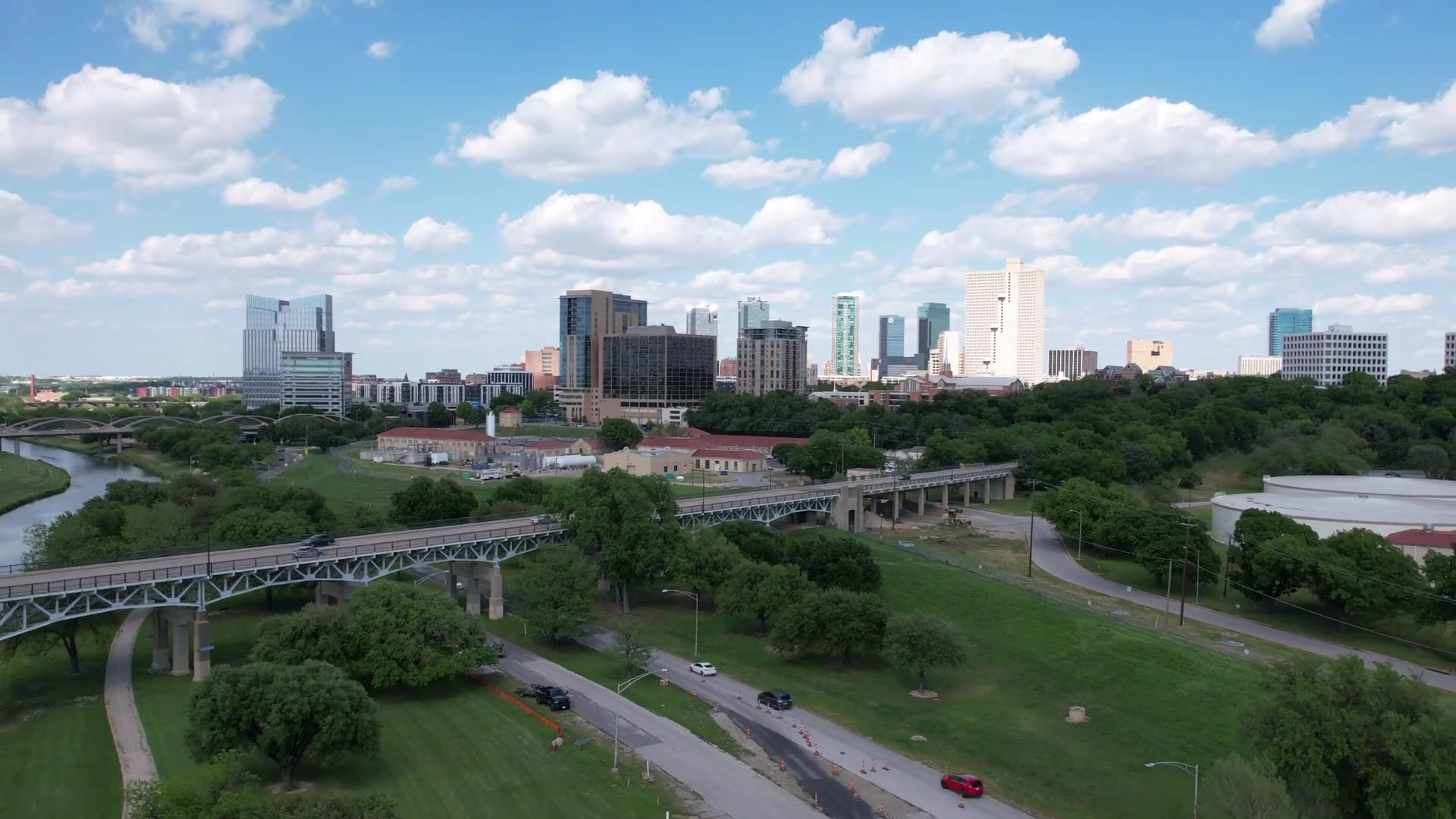
The Clear Fork runs along the northern edge of the area, with access to the Trinity Trails putting miles of Fort Worth along the river within reach by foot or bicycle. From here, the trail system connects toward Trinity Park, the Cultural District, downtown, and other parts of the city without requiring the car that shaped so much of postwar Fort Worth.
Five Miles That Feel Like Fort Worth
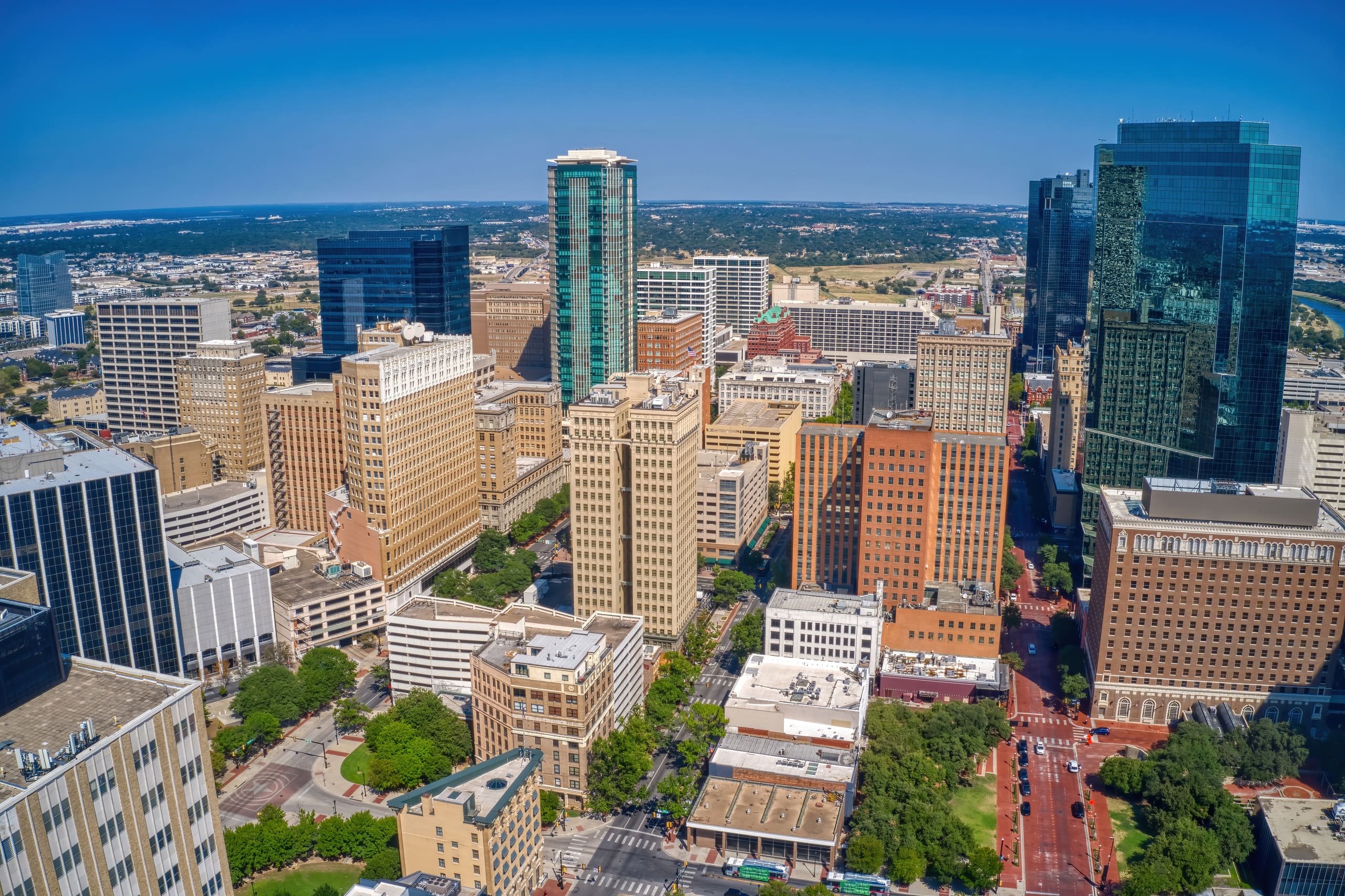
Downtown, the Cultural District, Near Southside, the hospital district, the Fort Worth Zoo, the river, TCU, and some of the city's best shopping are all remarkably close. But what I love most is that this part of town doesn't feel like a shortcut between them. It has enough history, architecture, trees, traditions, and neighborhood life to be a destination in its own right.
Property Types
Inside 76109 | The Neighborhoods and How They Differ
One ZIP code contains a surprising number of distinct Fort Worth neighborhoods. The names can blur together on a map or real estate search, but the architecture, lot sizes, relationship to TCU, and feel of the streets can change remarkably quickly.
Colonial Hills and Colonial Country Club
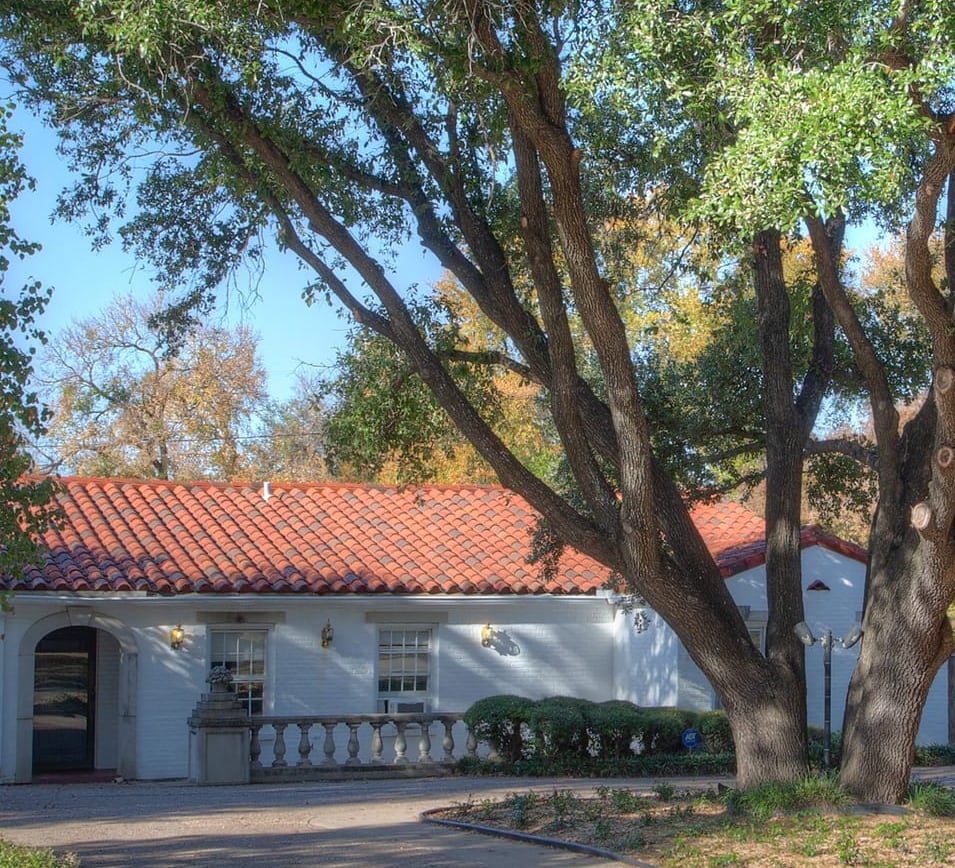
Colonial Hills wraps around Colonial Country Club along the south side of the Clear Fork, with houses ranging from 1930s and 1940s architecture through midcentury homes and substantial newer construction. Golf-course frontage, bluff and river proximity, mature trees, and larger lots can create significant differences even within the neighborhood itself.
One important distinction: buying a house in Colonial does not mean buying a membership to Colonial Country Club. Membership is private and separate from the real estate, including for houses overlooking the course. And every spring, tournament week transforms these otherwise residential streets with spectators, road closures, golf carts, parties, and some of the best people-watching in Fort Worth. For many neighbors, that's part of the fun.
The Neighborhoods Around TCU
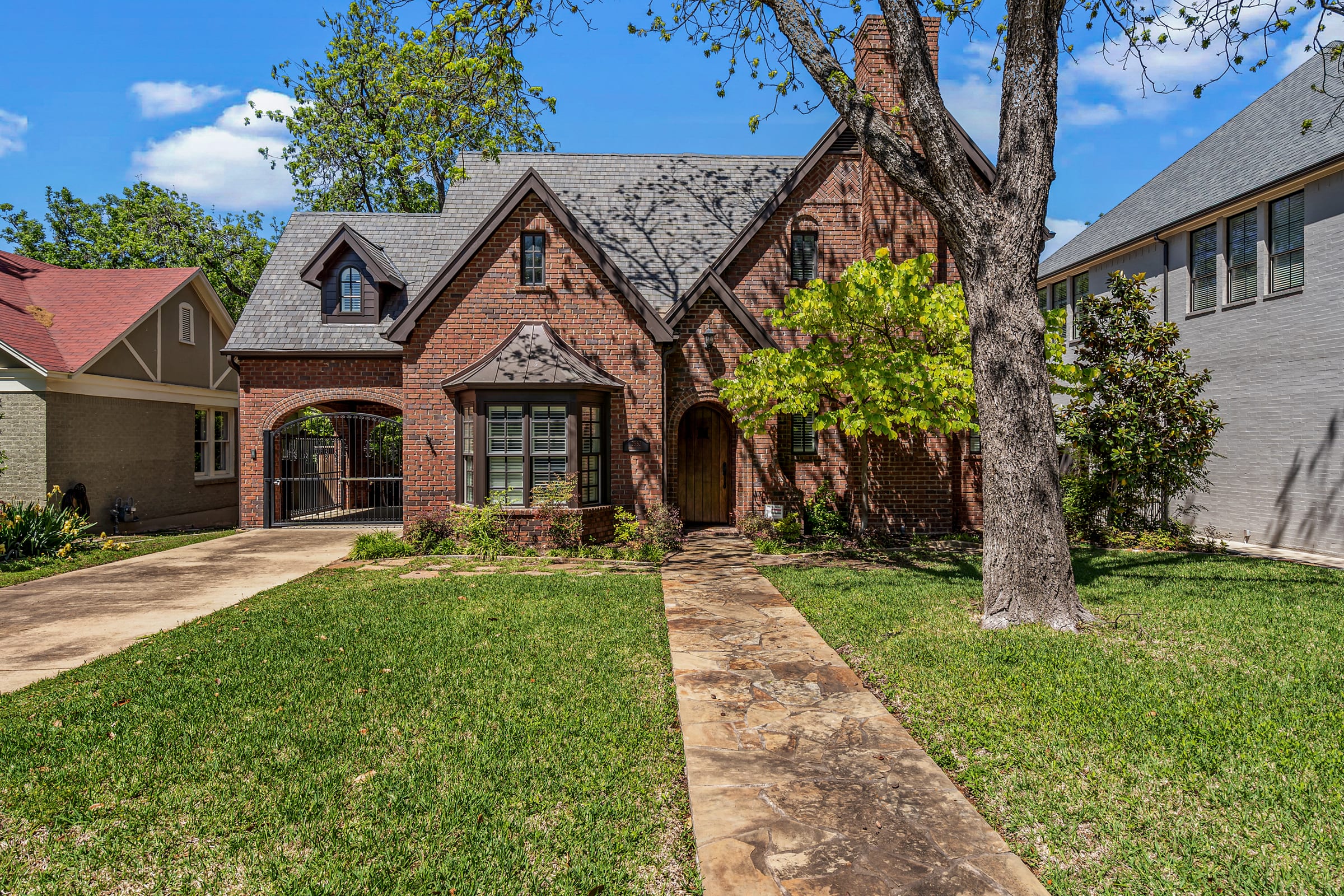
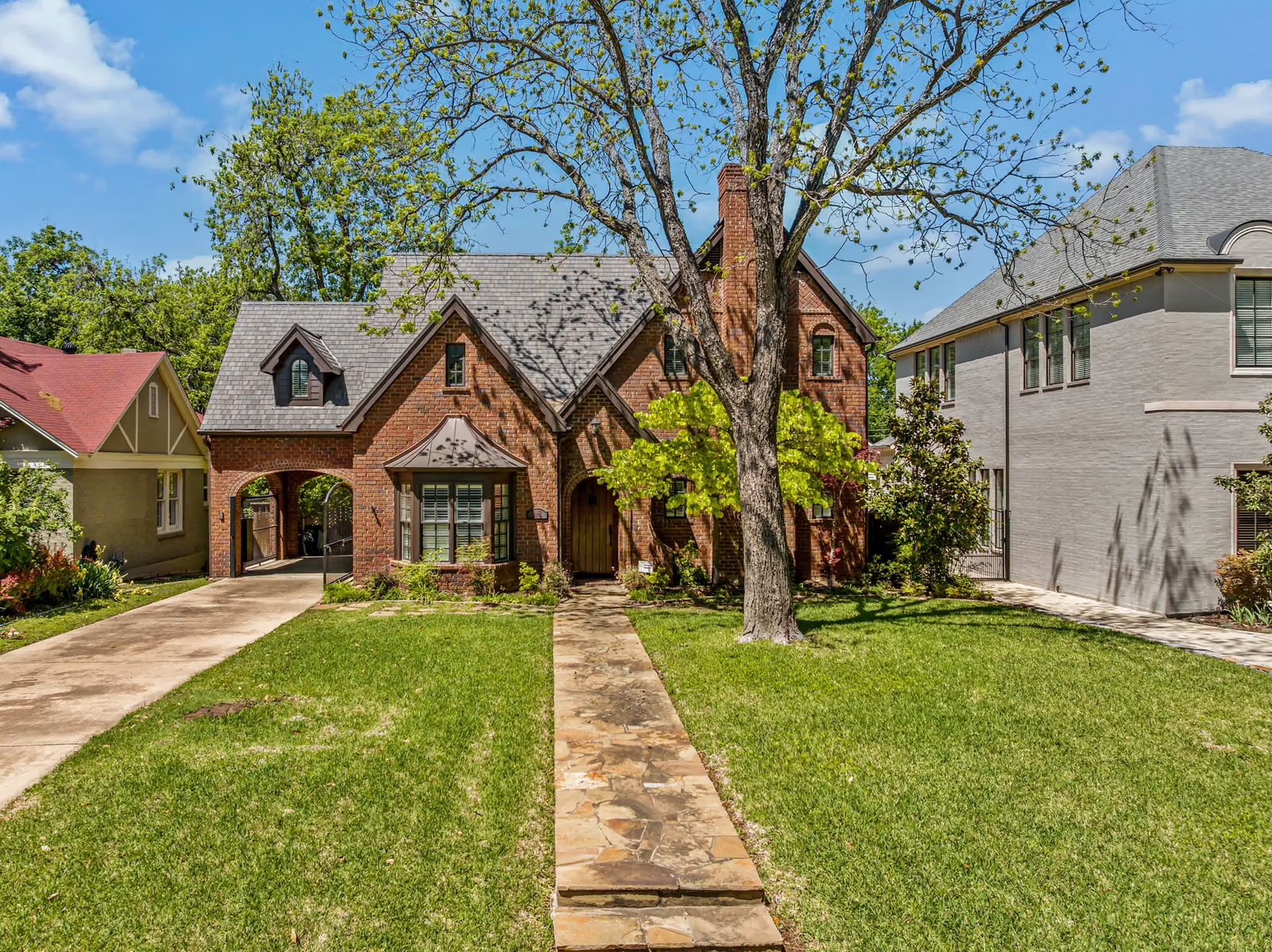
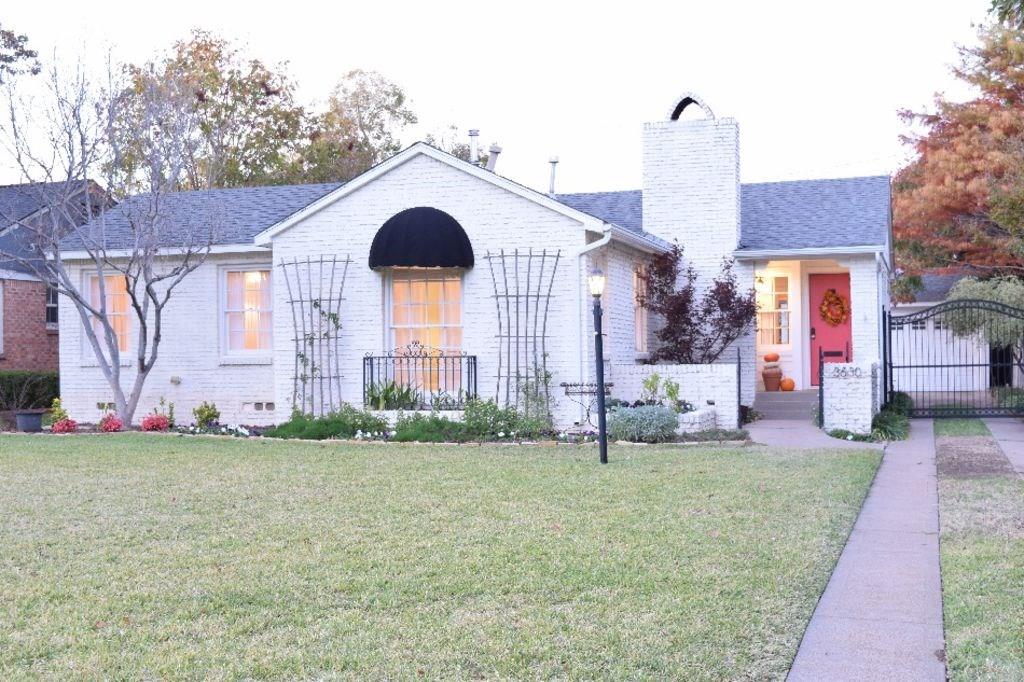
University Place, University West, Frisco Heights, Bluebonnet Hills, and Bluebonnet Place surround the TCU campus, but they aren't interchangeable. This is where you'll find much of the area's 1920s and 1930s architecture, including Tudors, cottages, and brick period houses, alongside postwar homes, major renovations, and increasingly substantial new construction.
The closer you get to campus, the more TCU influences the real estate. Student rentals, investor-owned properties, redevelopment, parking, and game-day traffic can change noticeably within only a few blocks. This is one part of Fort Worth where I would never evaluate a house from the listing alone. Walk the block on a weekday evening and again when something is happening at TCU. You'll learn considerably more.

Westcliff and Westcliff West
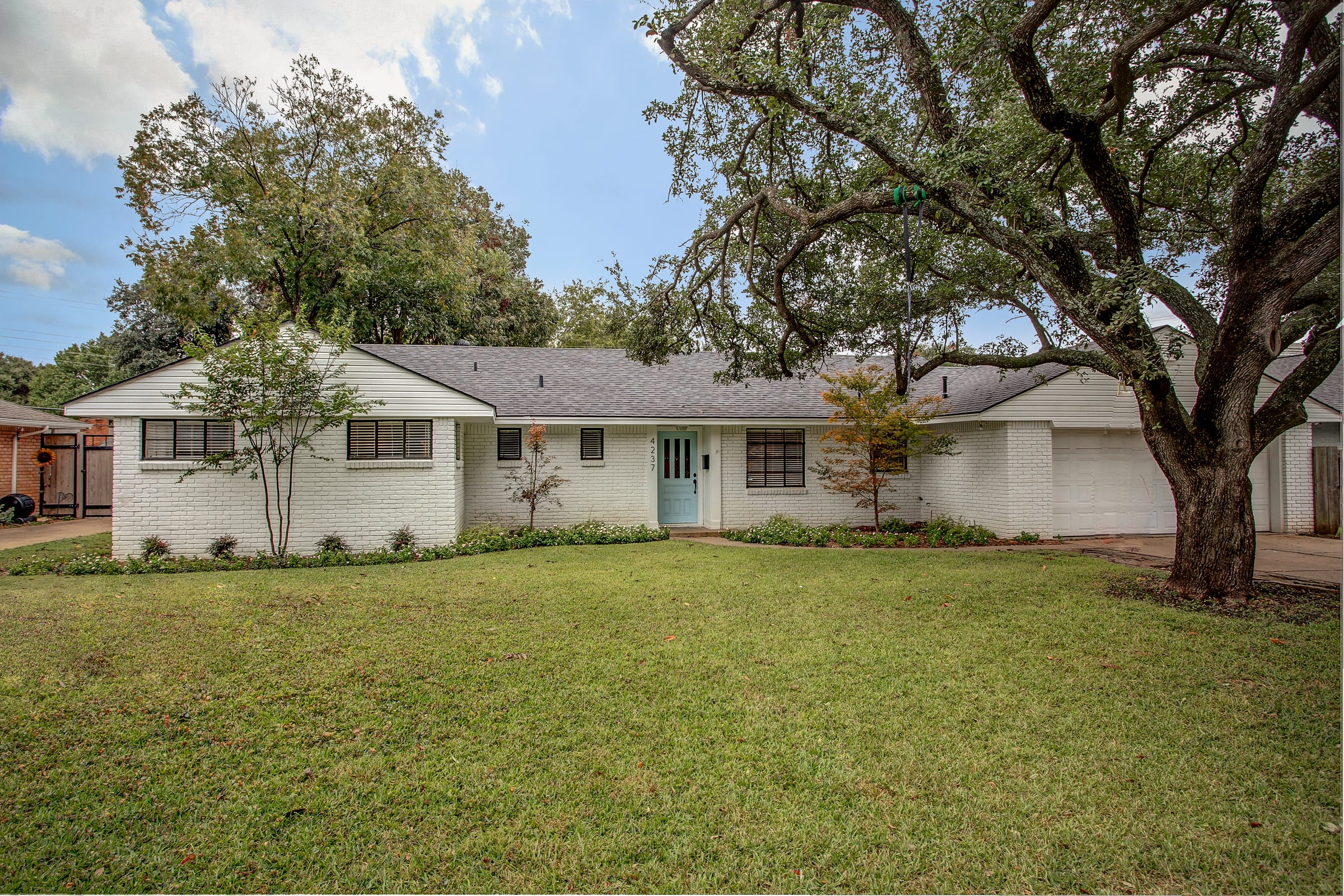
Cross south of Berry and you can almost watch the architecture change. Westcliff and Westcliff West developed largely during the 1940s, 1950s, and 1960s, when American houses were becoming lower, wider, and less formal. Brick ranches, long rooflines, attached garages, larger lots, and increasingly open living spaces tell the story of postwar Fort Worth as clearly as the Tudors farther north tell the story of the city a generation earlier.
That age also comes with a particular inspection list. Original or early replacement electrical systems, cast-iron or clay waste lines, foundations affected by North Texas soil, older windows, and aging mechanical systems all deserve attention. A beautifully updated kitchen doesn't tell you what's underneath the house.

University Proximity, Honestly
Living near TCU can be wonderful. You have a beautiful campus, athletics, concerts, lectures, restaurants, and the particular energy that comes from having a major university in the middle of a residential neighborhood. But exactly how close you want to be is personal.
The streets nearest campus can have more student rentals, investor ownership, redevelopment, parking pressure, and event traffic. A few blocks away, the character can change considerably. For an investor, that proximity may be precisely the point; for an owner-occupant, the quieter block nearby may be worth more. Neither is inherently better, but they are different real estate decisions.
And don't judge the neighborhood on a random Tuesday in July. If you're seriously considering a house near TCU, I want you to understand what that block feels like on a fall Saturday too.
Two Things to Check by Address
First, I want to know what neighborhood the house is actually in. A 76109 address tells me surprisingly little here, and pulling comparables from across the ZIP code can produce a very distorted picture of value. Colonial, University Place, Bluebonnet Hills, and Westcliff may sit minutes apart, but they are not interchangeable markets.
Second, I check the school assignment rather than assuming it from the neighborhood name. Attendance boundaries change across this part of Fort Worth, sometimes in places that aren't intuitive, so elementary, middle, and high school assignments should always be confirmed for the specific property with Fort Worth ISD.
Comparison
Inside 76109 | Neighborhood by Neighborhood
The important distinction isn't simply which neighborhood costs more. It's what you are buying and why. A Tudor in University Place, a ranch in Westcliff West, a house within walking distance of TCU, and a golf-course property in Colonial may all carry a 76109 address, but they belong to very different real estate markets.
Available Homes
Homes for Sale Near Colonial, TCU, and Westcliff
Browse current homes for sale near TCU, in Colonial Hills, and across Westcliff, from 1920s Tudors and period houses near the university to midcentury ranches, newer construction, and golf-course homes surrounding Colonial Country Club. Because the market can change considerably within just a few blocks, location, architecture, lot size, and proximity to TCU all matter when comparing homes here.
Search All 76109 ListingsLiving Here
Living Near TCU | The Campus, the River, and University Drive


A Campus in the Middle of the Neighborhood
TCU isn't tucked behind gates or separated from the neighborhoods around it. Its 302-acre campus sits directly along University Drive, with University Place, University West, Frisco Heights, and Bluebonnet Hills growing up around its edges. That makes the university part of everyday life here in a way that feels quite different from most Fort Worth neighborhoods.
Football Saturdays at Amon G. Carter Stadium are the obvious example, but TCU offers much more than game day. Concerts, lectures, galleries, performances, baseball, basketball, and a beautiful campus give neighbors reasons to use the university throughout the year. Along University Drive, restaurants, coffee shops, and everyday services make the campus area one of the few parts of south Fort Worth where quite a bit of daily life can happen on foot.
The Clear Fork, Parks, and Trinity Trails
At the northern end, the neighborhood meets the Clear Fork of the Trinity River, which curves past Colonial Country Club and connects this part of town to the Trinity Trails. From here, the trail system runs toward Trinity Park, the Cultural District, downtown, and miles beyond, giving a remarkably central part of Fort Worth easy access to the river.
There is plenty of green space away from the river too. Overton Park and Foster Park serve the neighborhoods farther south, while Forest Park, the Fort Worth Zoo, and Log Cabin Village sit just northeast. The Fort Worth Botanic Garden and its Japanese Garden are only a short drive away, putting some of the city's best outdoor spaces within a remarkably small radius.


University Drive and Everything Around It
University Drive is the spine that ties these neighborhoods together. University Park Village sits between TCU and the river, while The Shops at Clearfork are a short drive west. Head north instead and you reach Forest Park, the Near Southside, the Cultural District, and downtown Fort Worth in quick succession.
That centrality is one of the great practical advantages of living here. Interstate 30, Interstate 20, and the Chisholm Trail Parkway are all close, but much of what makes Fort Worth worth leaving the house for is already within a few miles.
Schools
Schools Near TCU | Fort Worth ISD and Independent Options
Most of the neighborhoods surrounding TCU, Colonial, and Westcliff are served by Fort Worth ISD and ultimately feed R. L. Paschal High School, but elementary and middle school assignments vary considerably by address. In a part of town where neighborhood boundaries and school zones don't always follow the same lines, I always recommend confirming the current assignment for the specific house rather than relying on the neighborhood name.

The Paschal Path
Westcliff Elementary, Overton Park Elementary, and Tanglewood Elementary are among the elementary schools serving this part of Fort Worth, with McLean and other middle-school assignments depending on address. Most of the area ultimately feeds Paschal High School on Forest Park Boulevard.
Paschal's history is really the history of public secondary education in Fort Worth. It traces its roots to Fort Worth High School in the 1880s, was renamed for longtime principal R. L. Paschal in 1935, and moved to its current Forest Park campus in 1955. Its alumni list is wonderfully Fort Worth: Ben Hogan, astronaut Alan Bean, Ginger Rogers, T Bone Burnett, and Charles Tandy all passed through the school.

TCU and the West Side Take Different Paths
This is one of the meaningful distinctions for buyers comparing south and west Fort Worth. TCU, Colonial, Westcliff, Berkeley Place, and Park Hill largely belong to the Paschal side of town, while neighborhoods including Monticello, Crestwood, River Crest, Westover Hills, and Ridglea generally feed Arlington Heights High School.
The two schools are longtime cross-town rivals with deep Fort Worth histories, but the more useful question for a buyer is what happens before high school. Elementary and middle-school assignments vary considerably, which is why I check the complete school path for the individual address.
Fort Worth ISD Is Changing
Fort Worth ISD is currently undergoing significant change. In March 2026, the Texas Education Agency suspended the authority of the elected trustees and installed an appointed governing board, with Dr. Peter Licata taking over as superintendent. The district is also in the midst of a multi-year consolidation plan that includes campus closures and boundary changes.
That makes checking by address especially important right now. School assignments, boundaries, and even the campuses themselves shouldn't be assumed from an old listing, neighborhood website, or what was true when someone down the street bought their house.

Independent Schools and Other Education Opportunities
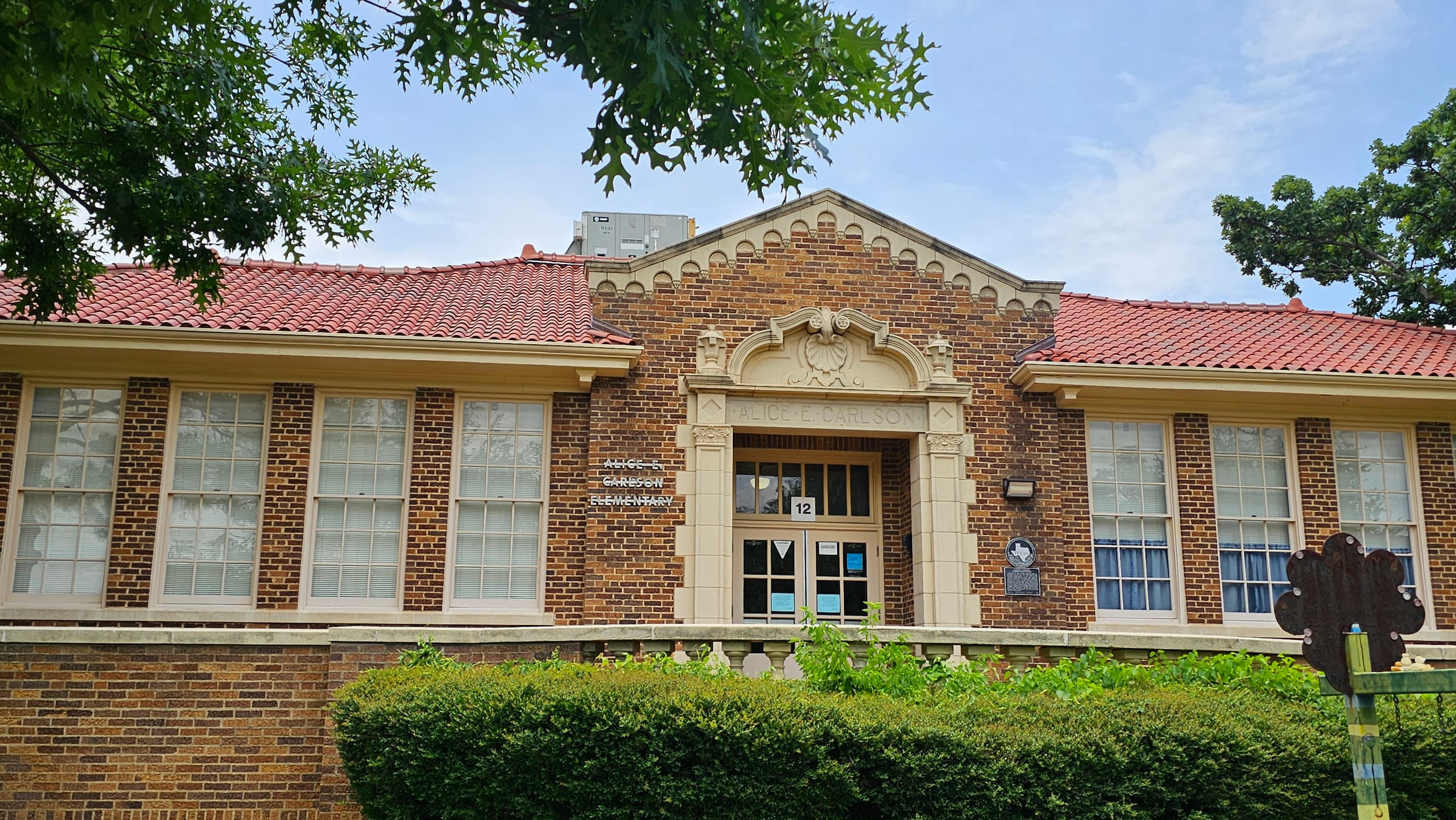
TCU is, of course, the defining educational institution here, but this part of Fort Worth offers several other educational options. Alice Carlson Applied Learning Center is a Fort Worth ISD school of choice near TCU. On campus, TCU also operates Starpoint School, its laboratory school serving students with learning differences, and KinderFrogs School, an early-intervention program for young children with Down syndrome and other developmental differences.
Among Fort Worth's independent schools, Fort Worth Country Day occupies roughly 100 acres in southwest Fort Worth, while Trinity Valley School and All Saints' Episcopal School are a reasonable drive west. Together with TCU, the Burnett School of Medicine, and the university's broader academic and cultural life, these schools make education unusually visible in this part of Fort Worth, with options extending well beyond the neighborhood attendance boundaries.
At a Glance
Colonial, TCU, and Westcliff at a Glance

5 mi
Location
South Fort Worth along University Drive, roughly five miles from downtown, from the Clear Fork of the Trinity River south past the TCU campus into Westcliff

76109
ZIP Code
Primarily 76109, one of Fort Worth's most established and varied residential ZIP codes

10
Neighborhoods Covered
Colonial Hills, University Place, University West, Frisco Heights, Bluebonnet Hills, Bluebonnet Place, Westcliff, and Westcliff West, with adjoining areas including Overton Woods and Overton West. Park Hill and Berkeley Place sit just northeast and are covered on their own neighborhood page

1920s to 1940s
Housing Character
A remarkably compact timeline of Fort Worth residential architecture: 1920s Tudors and period houses near TCU, 1930s and 1940s brick homes, and the low-slung ranch and midcentury houses of Westcliff, with substantial renovations and newer construction throughout

1873
The University
Texas Christian University, founded in 1873 as AddRan Male and Female College and established in Fort Worth in 1910. Today its 302-acre campus sits along South University Drive and includes undergraduate and graduate programs, the Neeley School of Business, Burnett School of Medicine, and distinctive programs in ranch management and energy business

1936
Golf
Colonial Country Club, founded by Marvin Leonard in 1936 along the Clear Fork. Colonial hosted the 1941 U.S. Open and has been home to a PGA Tour event since 1946, now the Charles Schwab Challenge, with its long association with Ben Hogan earning the course the nickname Hogan's Alley
Paschal High School
Schools
Fort Worth ISD, with most addresses in this area ultimately feeding R. L. Paschal High School. Elementary and middle-school assignments vary by address and should always be confirmed directly with the district. Fort Worth ISD is currently undergoing state intervention and a multi-year campus consolidation process
6 schools
Educational Options
Alice Carlson Applied Learning Center is a nearby Fort Worth ISD school of choice. TCU operates Starpoint School and KinderFrogs School on campus, while Fort Worth Country Day, Trinity Valley School, and All Saints' Episcopal School are among the independent-school options within a reasonable drive

Trinity Trails
Parks and Open Space
The Clear Fork of the Trinity River and Trinity Trails anchor the northern end, with Overton Park and Foster Park nearby. Forest Park, the Fort Worth Zoo, Log Cabin Village, and the Fort Worth Botanic Garden are all a short drive away

University Park Village
Shopping and Dining
University Park Village along University Drive, The Shops at Clearfork to the west, and easy access north toward the restaurants and businesses of the Near Southside and Magnolia Avenue

Block by block
What Buyers Should Know
Proximity to TCU matters block by block. Student rentals, investor activity, redevelopment, parking, and event traffic can become more noticeable close to campus, so experience the specific street at different times before making a decision

8 areas nearby
Nearby
Park Hill and Berkeley Place to the northeast, Tanglewood and Overton Park to the west, and the Near Southside, hospital district, Cultural District, and downtown Fort Worth within a few miles
Sources: Colonial Country Club and Historic Fort Worth; Texas Christian University; Fort Worth ISD and the Texas Education Agency; City of Fort Worth Parks and Recreation; and Trinity Trails. School attendance zones, programs, and accountability ratings are set by the school district and the Texas Education Agency and are subject to change. Buyers should verify current zoning and campus information for a specific address before relying on school information in a real estate decision.
In Pictures
TCU, Colonial, and Westcliff


Featured Properties
Related Reading


Questions
Frequently Asked Questions About Colonial, TCU, and Westcliff Real Estate
What neighborhoods are near TCU in Fort Worth?
What types of homes are near TCU?
Is Westcliff a good place to buy in Fort Worth?
What should I know before buying a house near TCU?
What is Colonial Country Club's history?
What schools serve the TCU, Colonial, and Westcliff neighborhoods?
What is it like to live near TCU?
Why does the specific neighborhood matter so much in 76109?
Who should I call about buying or selling near TCU, Colonial, or Westcliff?
University Place, University West, Frisco Heights, Bluebonnet Hills, and Bluebonnet Place surround the TCU campus, with Colonial Hills and Colonial Country Club to the north and Westcliff and Westcliff West extending south. Overton Woods and Overton West lie farther west, while Park Hill and Berkeley Place sit northeast toward Forest Park. The neighborhoods are close geographically, but their architecture, lot sizes, relationship to TCU, and real estate markets can be quite different.
The neighborhoods around TCU contain an unusually broad cross-section of Fort Worth residential architecture. University Place and the older campus neighborhoods have 1920s and 1930s Tudors, cottages, and period brick houses; Colonial adds substantial prewar and midcentury homes; and Westcliff is known for the ranch and midcentury houses that followed during the 1940s, 1950s, and 1960s. Renovations and newer construction appear throughout, particularly on lots close to the university.
Westcliff appeals to buyers who like larger lots, mature trees, single-story houses, and postwar architecture while remaining close to TCU and central Fort Worth. Much of the neighborhood was developed during the 1940s through 1960s, so buyers should pay particular attention to the things that come with houses of that age: electrical systems, cast-iron or clay waste lines, foundations, windows, roofs, and mechanical systems. The pretty part is easy to see. I want to know what's underneath it too.
Proximity to TCU can change the character of a street within only a few blocks. The streets closest to campus may have more student rentals, investor-owned properties, redevelopment, parking pressure, and game-day traffic, while nearby streets can feel considerably more residential. For some buyers, walking to TCU is the attraction; for an investor, proximity may be the entire strategy.
If you're seriously considering a house here, don't evaluate the block only on a quiet weekday. See it in the evening and, if you're close to campus, understand what happens on a fall football Saturday. A listing can tell you about the house. It can't tell you how the street lives.
Marvin Leonard founded Colonial Country Club in 1936 because he wanted to establish bentgrass greens in Texas. Golf architects John Bredemus and Perry Maxwell designed the course, which hosted the 1941 U.S. Open only five years after opening and has been home to a PGA Tour event since 1946. Ben Hogan won at Colonial five times, creating the course's enduring nickname, Hogan's Alley.
Most addresses in this area are served by Fort Worth ISD and ultimately feed R. L. Paschal High School, but elementary and middle-school assignments vary by address. Westcliff, Overton Park, and Tanglewood are among the elementary campuses serving the broader area, while Alice Carlson Applied Learning Center is a nearby Fort Worth ISD school of choice rather than a neighborhood-zoned elementary.
TCU also operates Starpoint School and KinderFrogs School on its campus, and Fort Worth Country Day, Trinity Valley School, and All Saints' Episcopal School are among the independent-school options within a reasonable drive. Because Fort Worth ISD is currently undergoing state intervention, campus consolidation, and potential boundary changes, school assignments should always be confirmed for the specific address directly with the district.
Living near TCU means having a major university woven directly into the neighborhood. Football at Amon G. Carter Stadium is the most visible part of campus life, but residents also have access to concerts, lectures, galleries, performances, baseball, basketball, and the restaurants and businesses along University Drive.
The location also puts the Clear Fork and Trinity Trails, Colonial Country Club, University Park Village, Forest Park, the Fort Worth Zoo, Log Cabin Village, and the Near Southside within a remarkably small radius. It is one of the places in Fort Worth where university life, established residential neighborhoods, and the river all meet.
Because 76109 is not one real estate market. A Tudor near TCU, a 1950s ranch in Westcliff, and a golf-course house in Colonial can be only minutes apart while attracting different buyers and competing against completely different properties. Architecture, lot size, condition, proximity to campus, and even the character of the individual block matter more here than the shared ZIP code.
For buyers and sellers, the useful question isn't simply whether a house is in 76109. It's where in 76109.
Susanna Gorski Bartolomei represents buyers and sellers across Colonial, the TCU area, and Westcliff, alongside Berkeley Place, Park Hill, Tanglewood, River Crest, Westover Hills, Ridglea, Monticello, and the rest of west Fort Worth. A Broker Associate at Compass, a fifth-generation Fort Worth native, and an art historian, she brings an understanding of architecture together with the block-by-block knowledge that matters in an area where a 1920s Tudor can sit minutes from a 1950s ranch and proximity to TCU can change the market from one street to the next. Call (817) 602-5465 or email sgb@compass.com.
Buy or Sell Near Colonial, TCU, and Westcliff
Susanna Bartolomei represents buyers and sellers across the TCU area, Colonial Hills, and Westcliff, alongside Park Hill, Berkeley Place, Tanglewood, Overton Park, and the west-side neighborhoods from Monticello and River Crest through Westover Hills and Ridglea. A Broker Associate at Compass, a fifth-generation Fort Worth native, and an art historian, she works both sides of the city, which means the question of whether a 1920s house near TCU, a midcentury ranch in Westcliff, or a house three miles west serves you better is one honest conversation rather than three. Call (817) 602-5465 or email sgb@compass.com.
Agent
Susanna Gorski Bartolomei
Title
Broker Associate, Compass Real Estate
Phone
(817) 602-5465Office
5049 Edwards Ranch Road, Suite 200, Fort Worth, TX 76109
Hours
Monday to Friday, 9:00 am to 5:00 pm. Saturday and Sunday by appointment
Languages
English and French
Website
SusannaFortWorth.com
TREC License
0619175